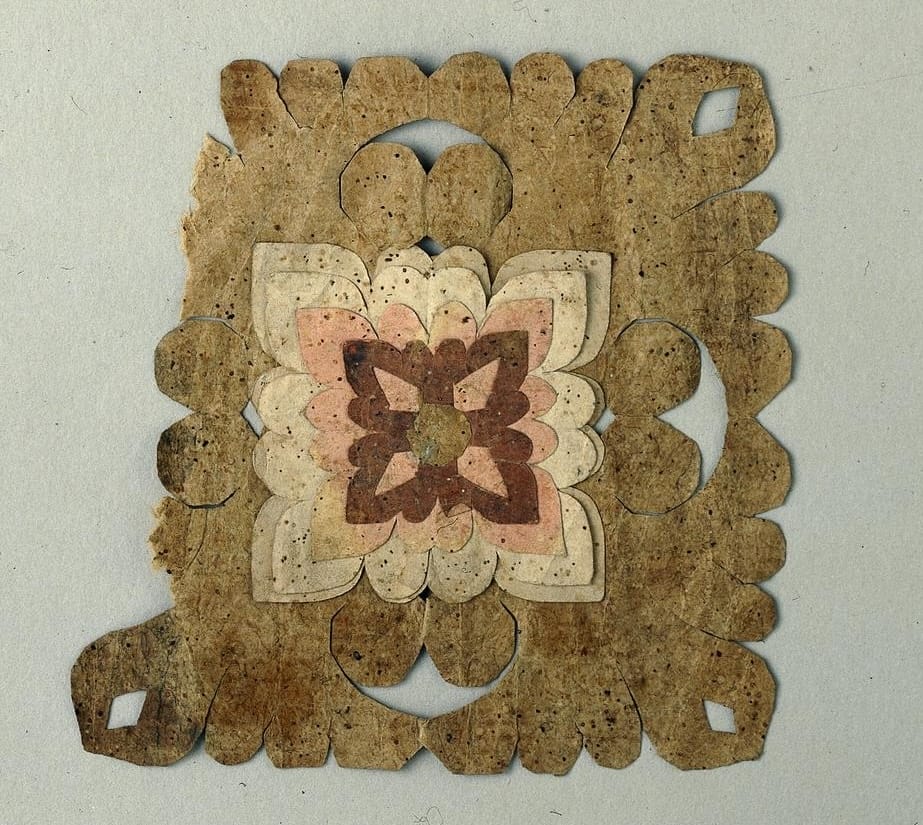
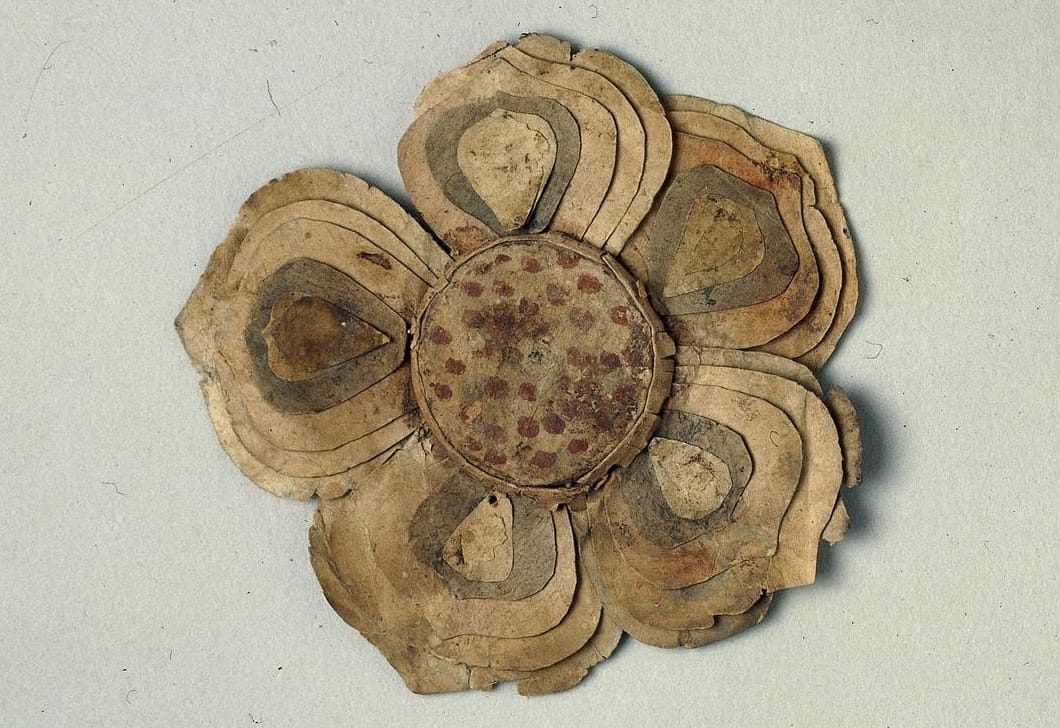
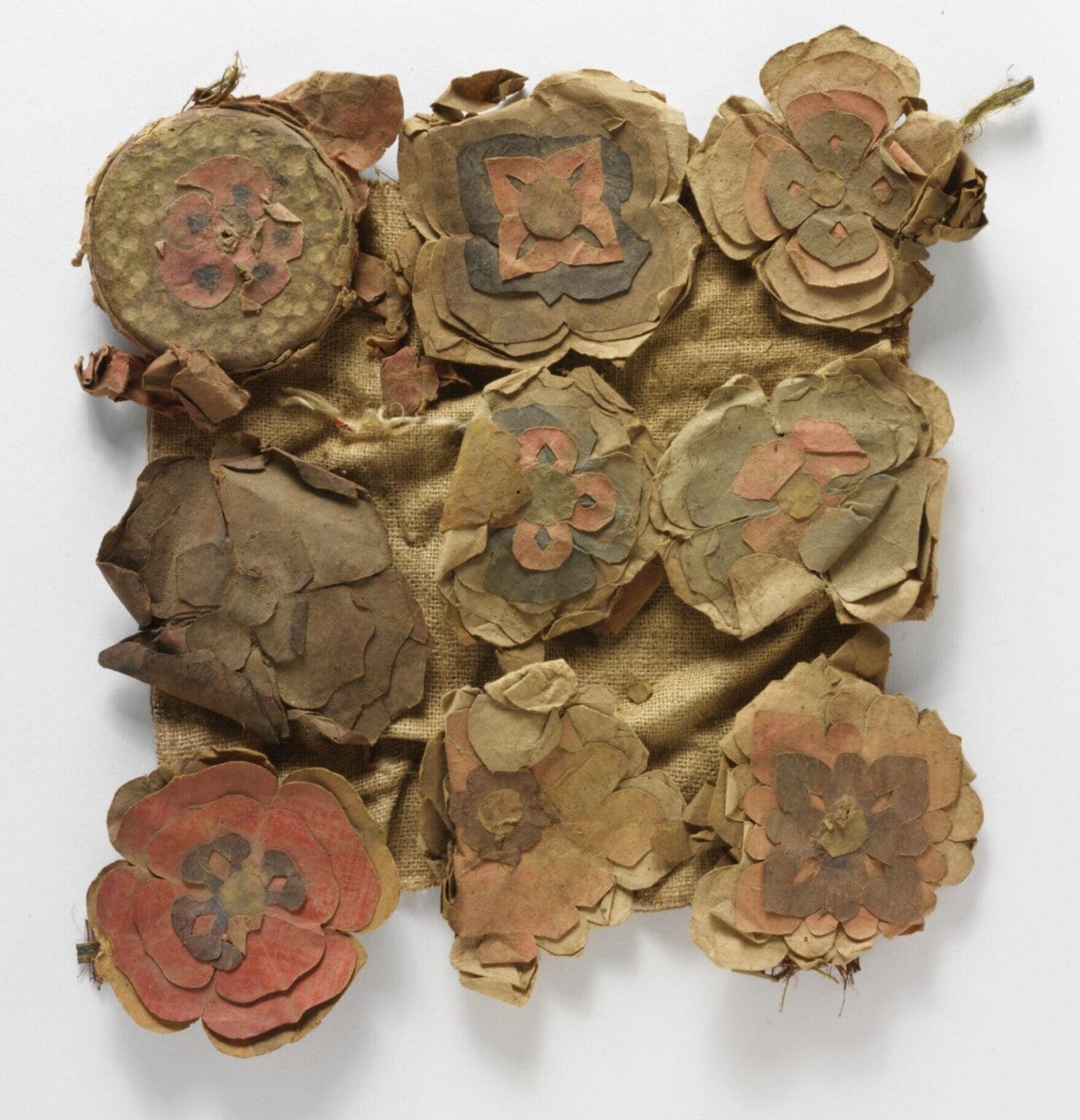
Paper is, by nature, not exactly built to last. Spill a coffee on it and it gives up immediately. Leave it outside in the rain and it dissolves into a sad pulp. And yet, somehow, six delicate paper flowers made more than a thousand years ago have survived in remarkable condition, quietly waiting in a sealed cave along the Silk Road, making them some of the earliest examples of cut paper and collage to have been preserved ever.
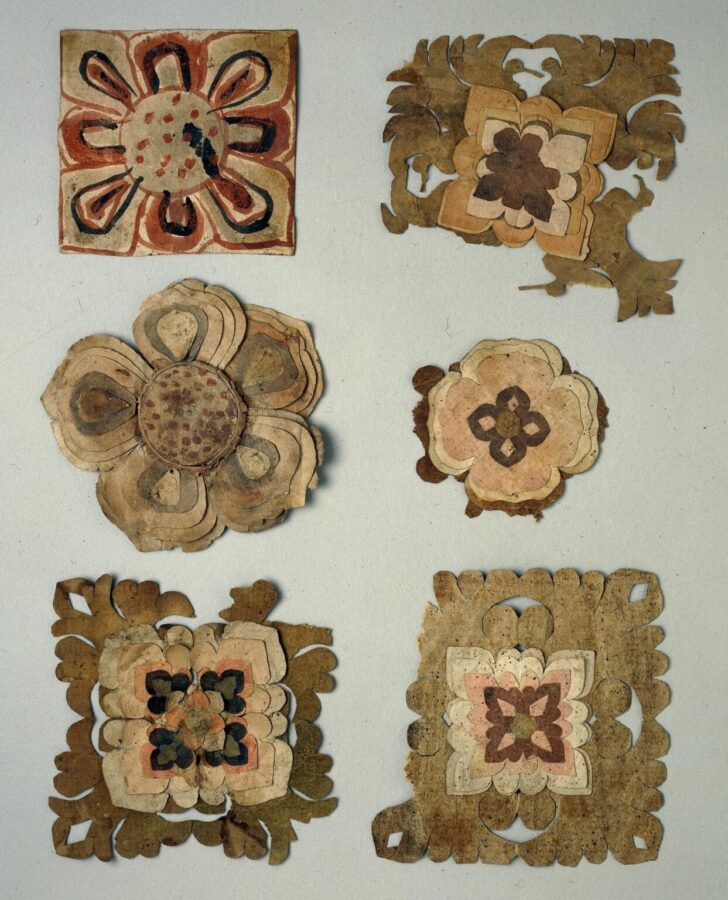
This improbable survival story takes us to the Mogao Caves near Dunhuang in present-day Gansu province, a vast complex of Buddhist cave temples often called the “Caves of the Thousand Buddhas.” Carved into desert cliffs in the beginning of the 4th century, the site grew into a sprawling religious and cultural hub, with hundreds of decorated caves filled with murals, sculptures, and devotional objects spanning over a millennium.
Somehow, six delicate paper flowers made more than a thousand years ago have survived in remarkable condition, quietly waiting in a sealed cave along the Silk Road, making them some of the earliest examples of cut paper and collage ever preserved.
Among these caves, one small chamber, known today as Cave 17, or the “Library Cave”, contained an extraordinary time capsule. Sealed around the early 11th century, likely to protect its contents during a turbulent period, the cave preserved tens of thousands of manuscripts, textiles, and artworks in near-perfect stillness. And tucked away among them were these delicate yet remarkable paper flowers.
Discovered in the early 20th century by archaeologist Marc Aurel Stein, the flowers are intricate constructions of cut and layered paper, some still holding traces of pigment and careful craftsmanship.
The paper flowers date back roughly a thousand years, likely to the Tang dynasty (618–907), and were probably used as part of Buddhist ritual decoration – perhaps adorning shrines, hanging installations, or ceremonial displays. Despite their modest materials, they were clearly made with intention. Carefully cut petals, layered compositions, and subtle coloring designed to catch flickering lamplight. In other words, not your average arts-and-crafts project of the time period.
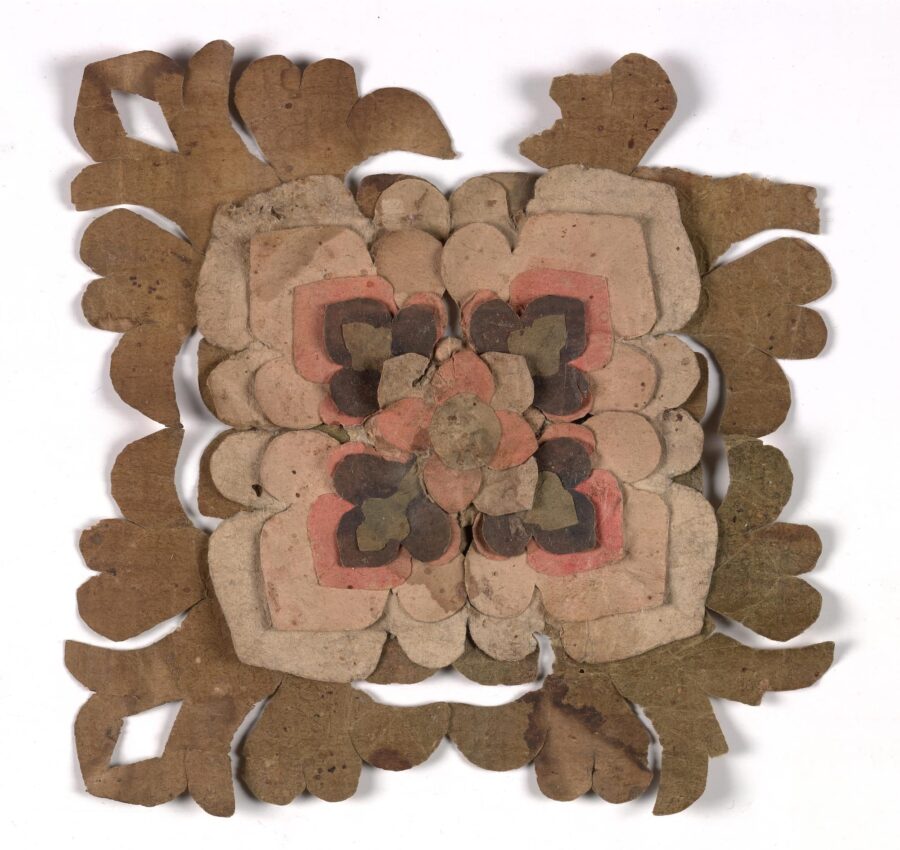
What makes them truly astonishing is not just their design, but their survival. Paper, after all, is famously fragile, but in this case, a combination of the dry desert climate and a well-sealed cave created ideal preservation conditions. Left undisturbed for centuries, these ephemeral objects outlasted dynasties, trade routes, and even the Silk Road itself.
Today, the paper flowers reside in museum collections far from the caves where they were first used. But their story remains rooted in Dunhuang: a place where monks once carved sanctuaries into cliffs, merchants carried ideas across deserts, and someone, at some point, sat down with paper, pigment, and a careful hand to make something beautiful. They likely had no idea it would still exist a millennium later. Then again, paper has always been full of surprises.