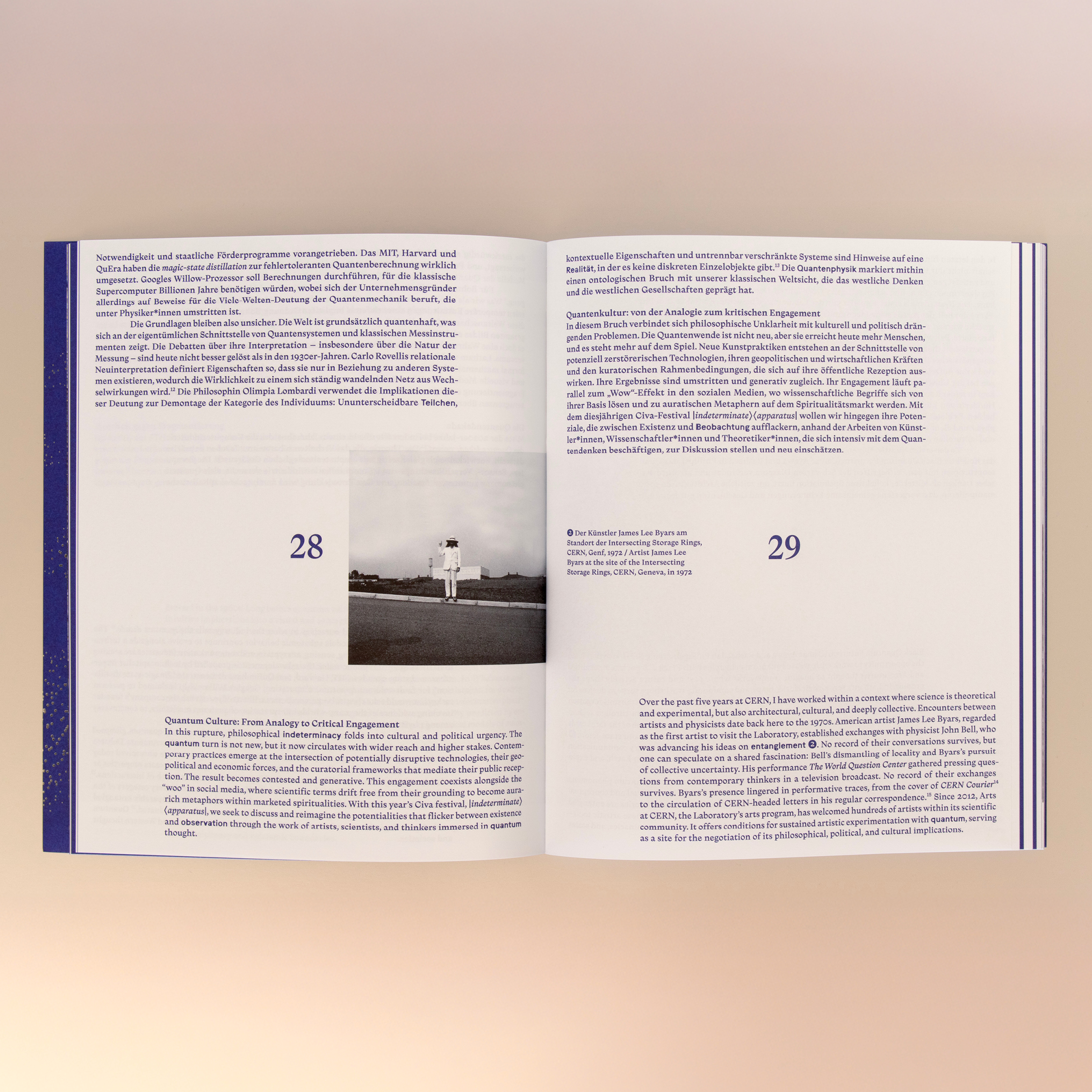
Some books document an exhibition, and then there are books that extend it. The catalogue |indeterminate⟩⟨apparatus|, released alongside the fifth edition of the Civa media art festival, belongs firmly to the latter. It is not simply a container of ideas, but a tactile, visual, and material continuation of the exhibition’s central inquiry: how do we engage with the indeterminate?
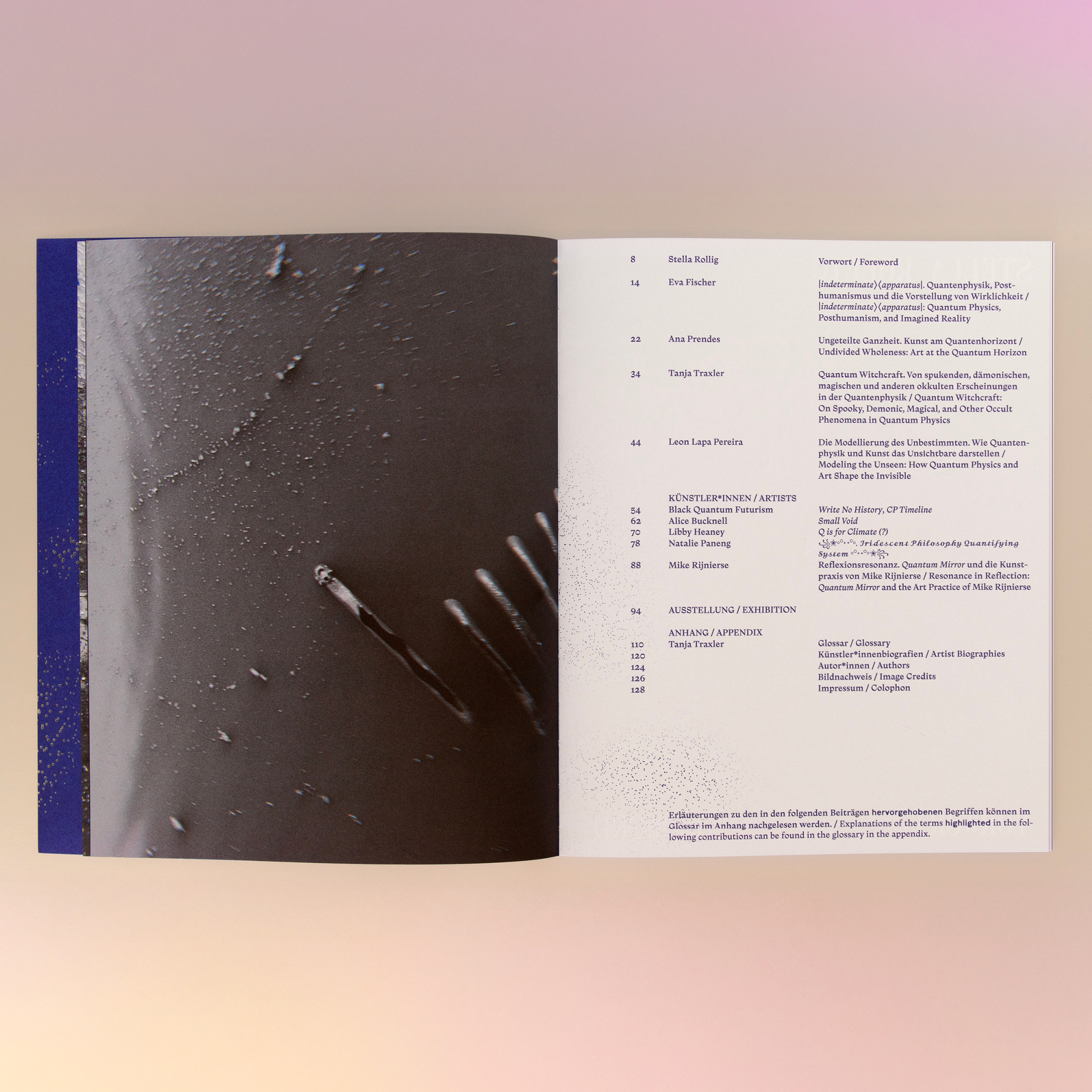
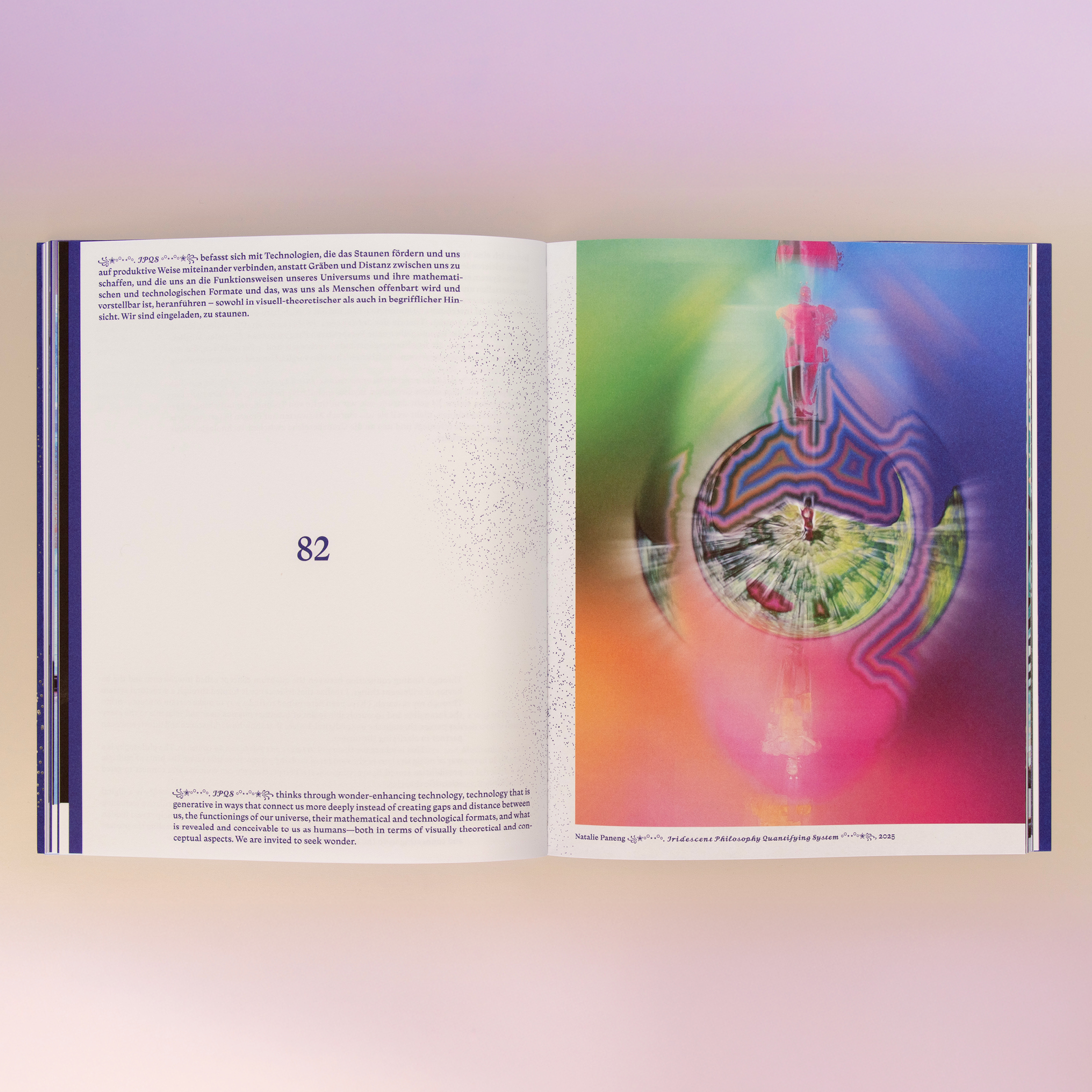
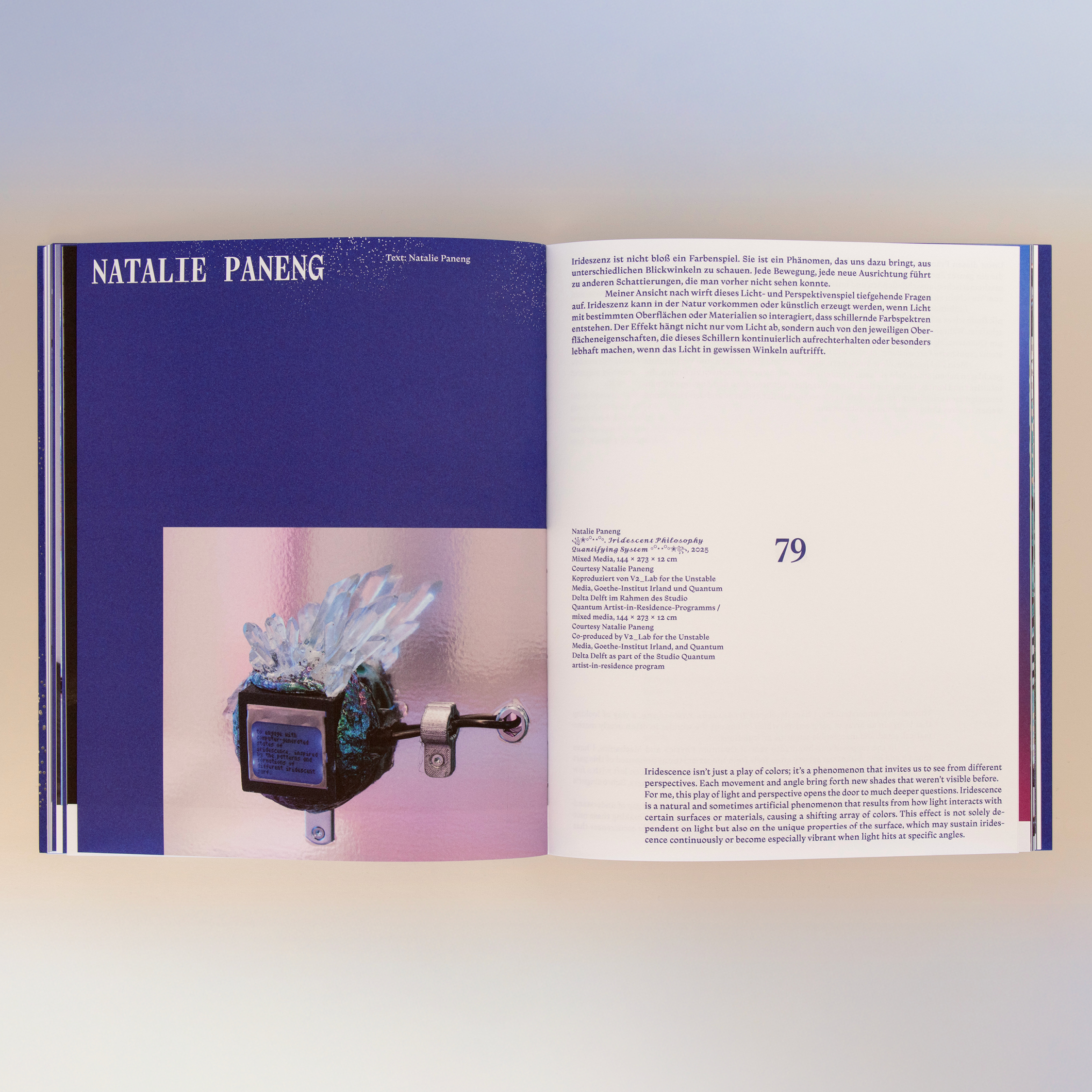
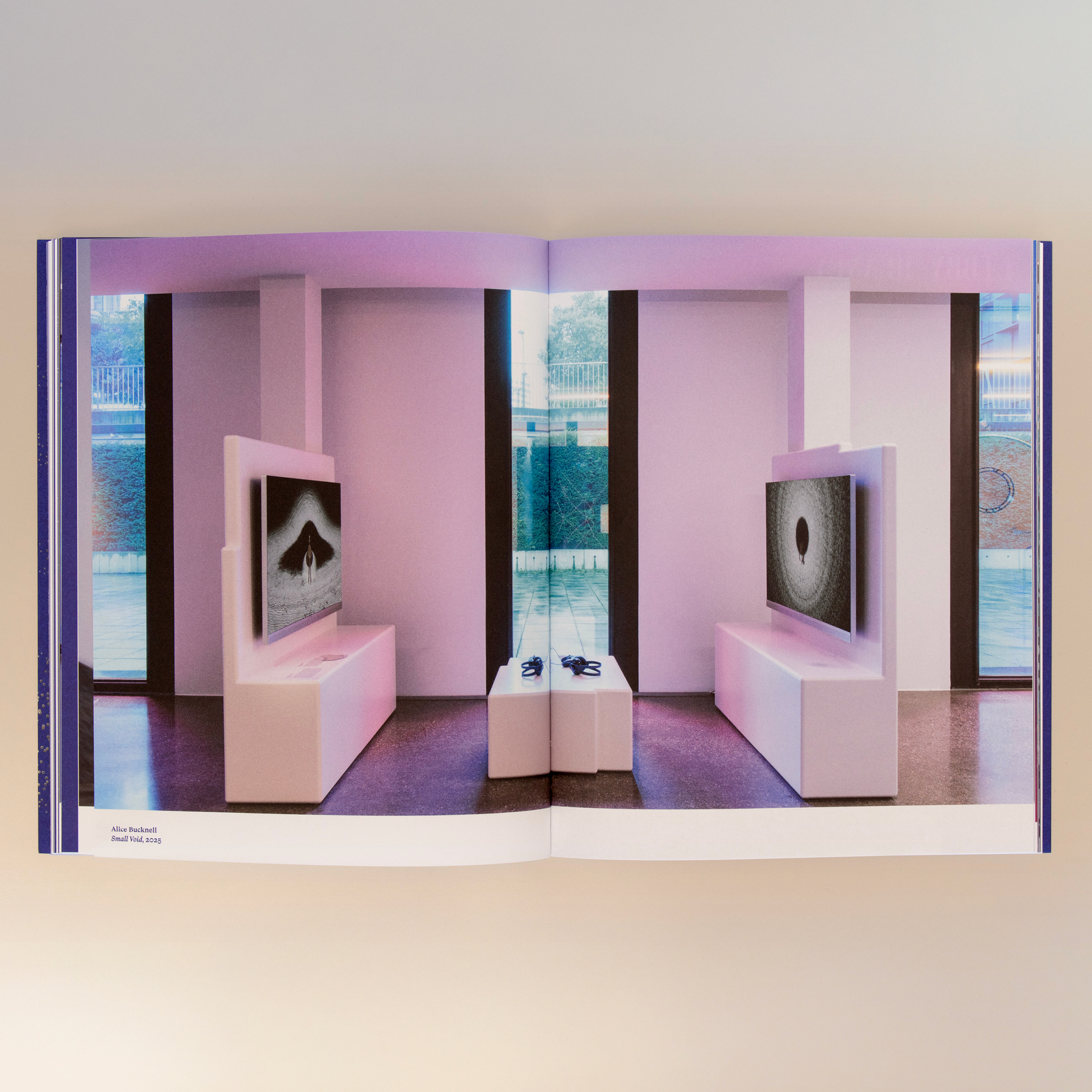
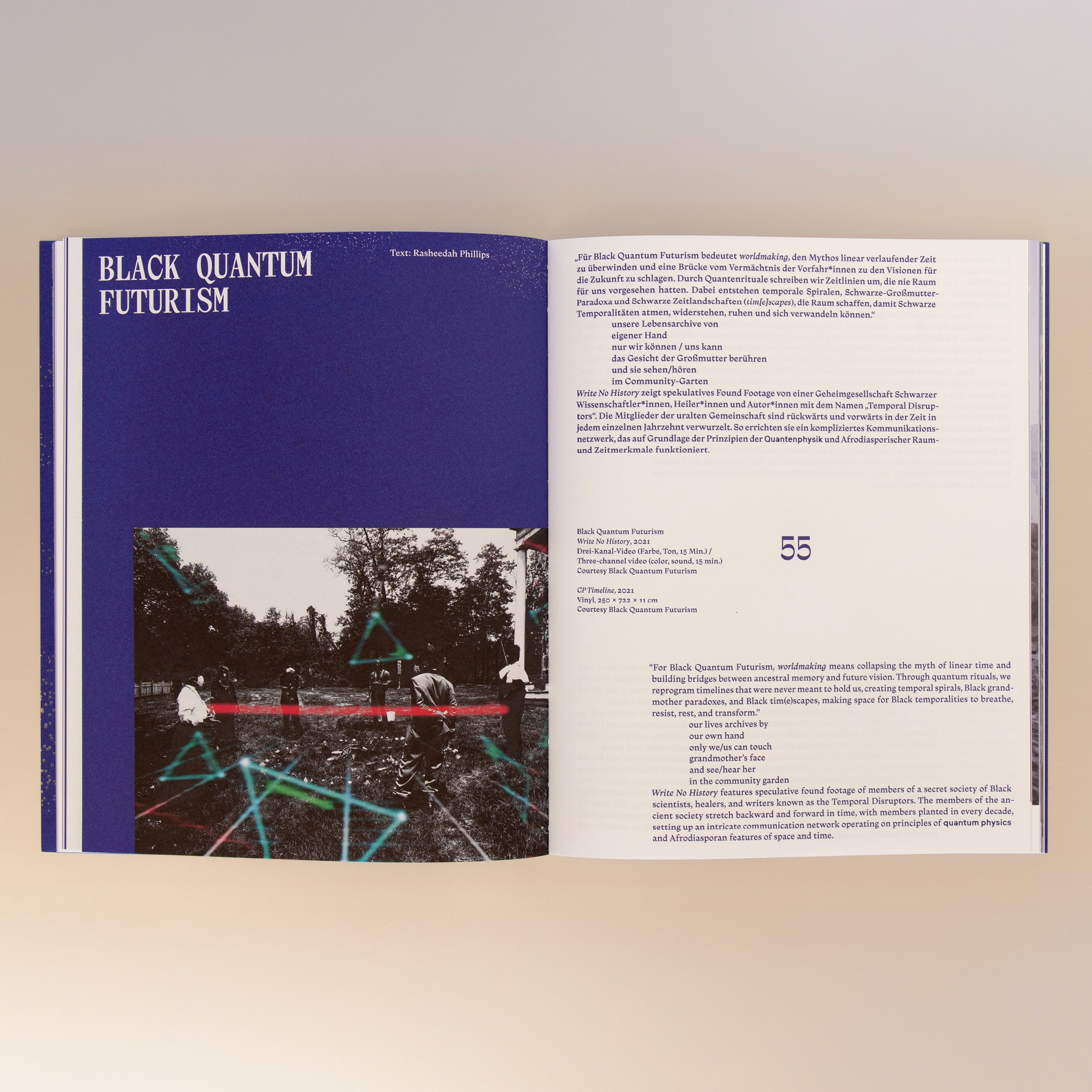
Published along with the exhibition at Belvedere 21, the book brings together artistic and theoretical perspectives that orbit around quantum concepts such as entanglement, superposition, and observation. Artists including Black Quantum Futurism, Alice Bucknell, Libby Heaney, Natalie Paneng, and Mike Rijnierse contribute to a layered exploration of non-binary realities — where science, aesthetics, and politics dissolve into one another.
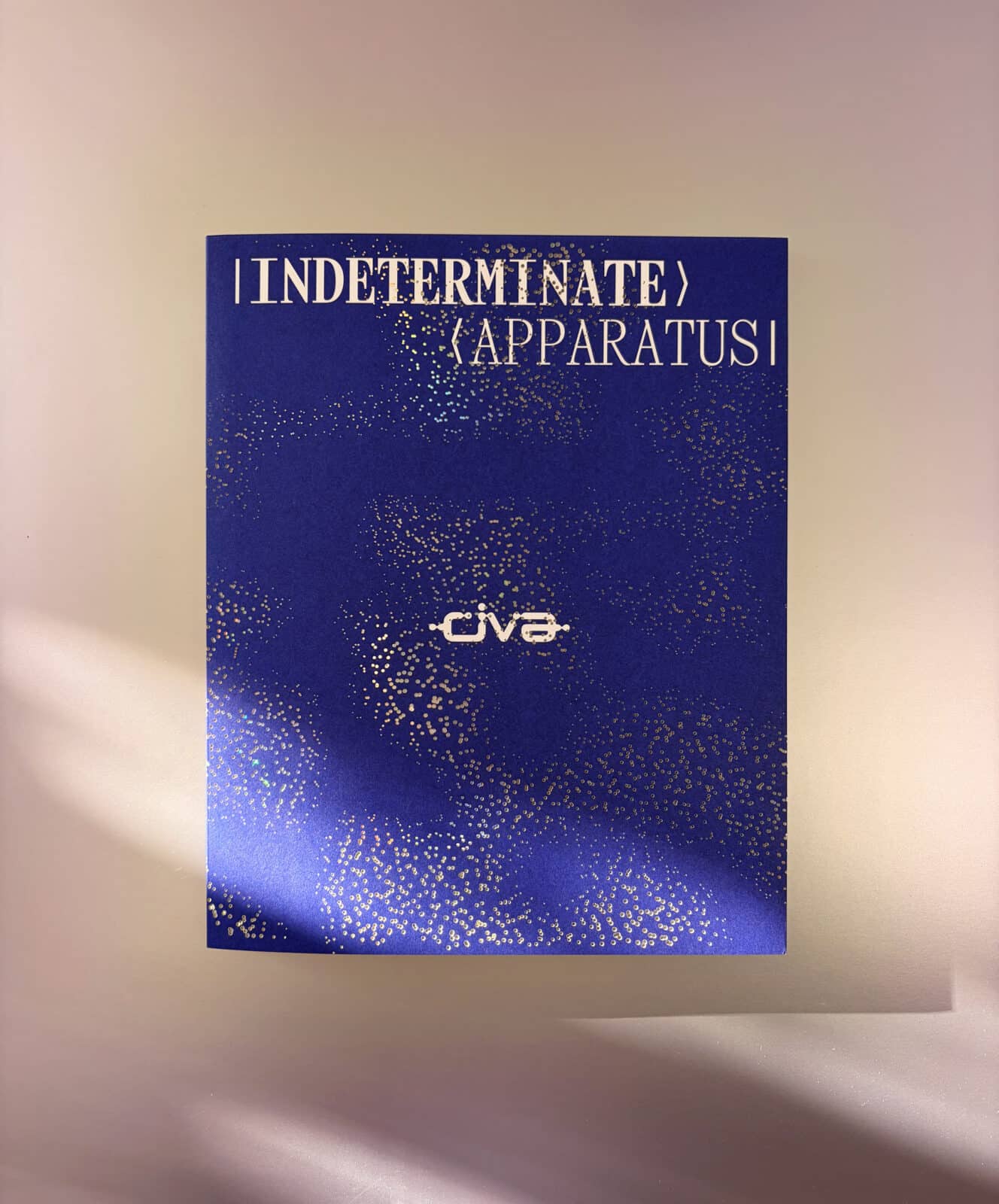
What truly sets this publication apart is how precisely its materiality mirrors its conceptual core.
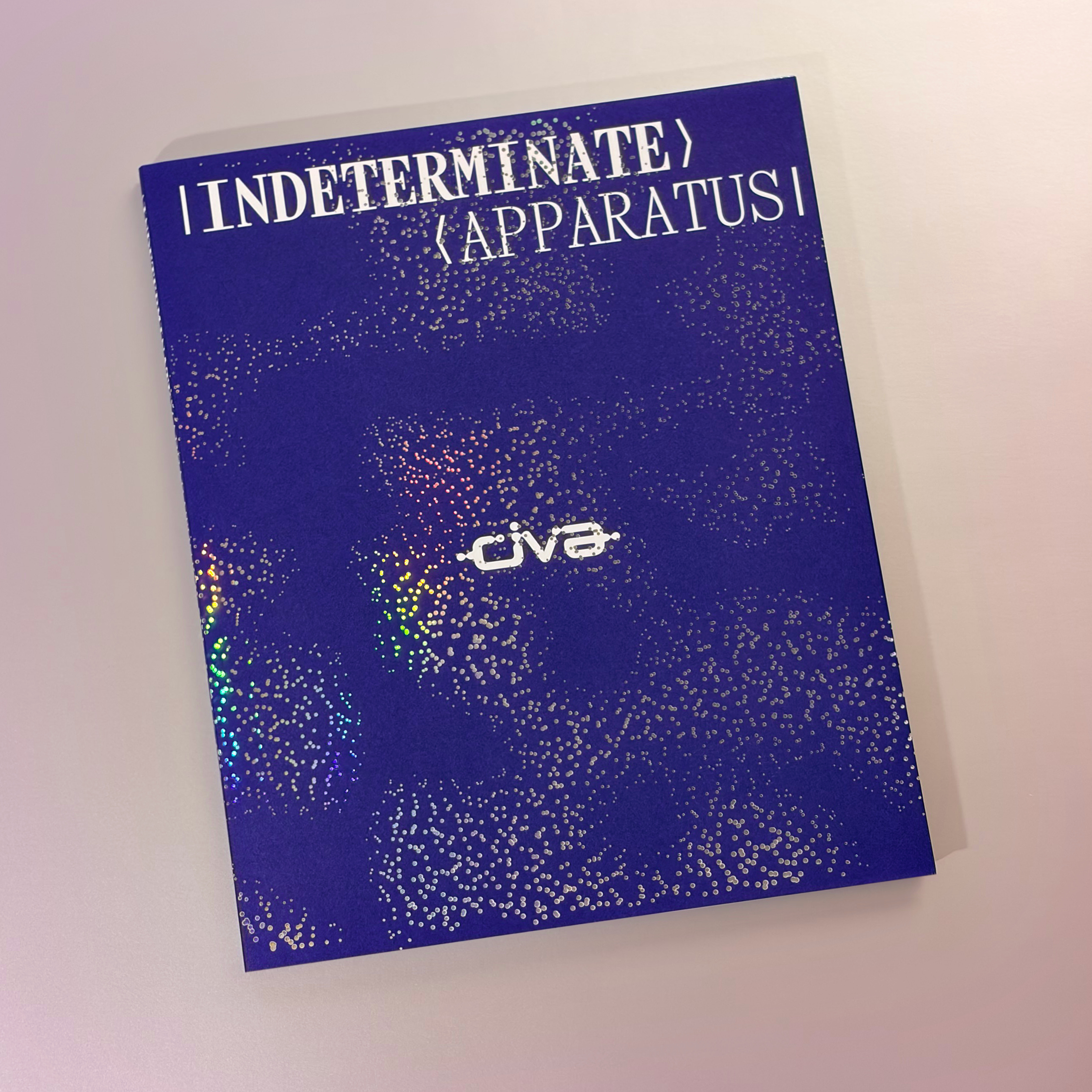
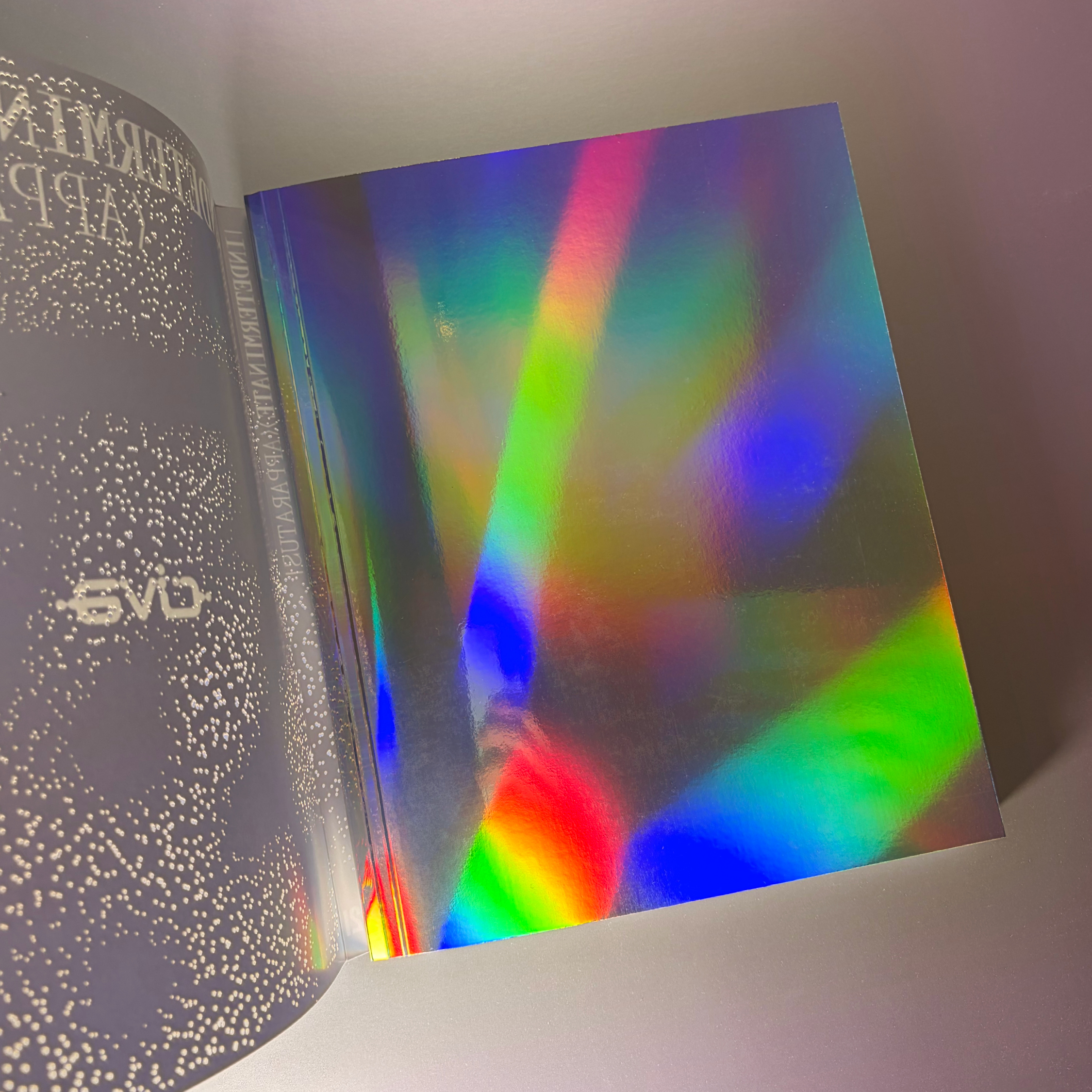
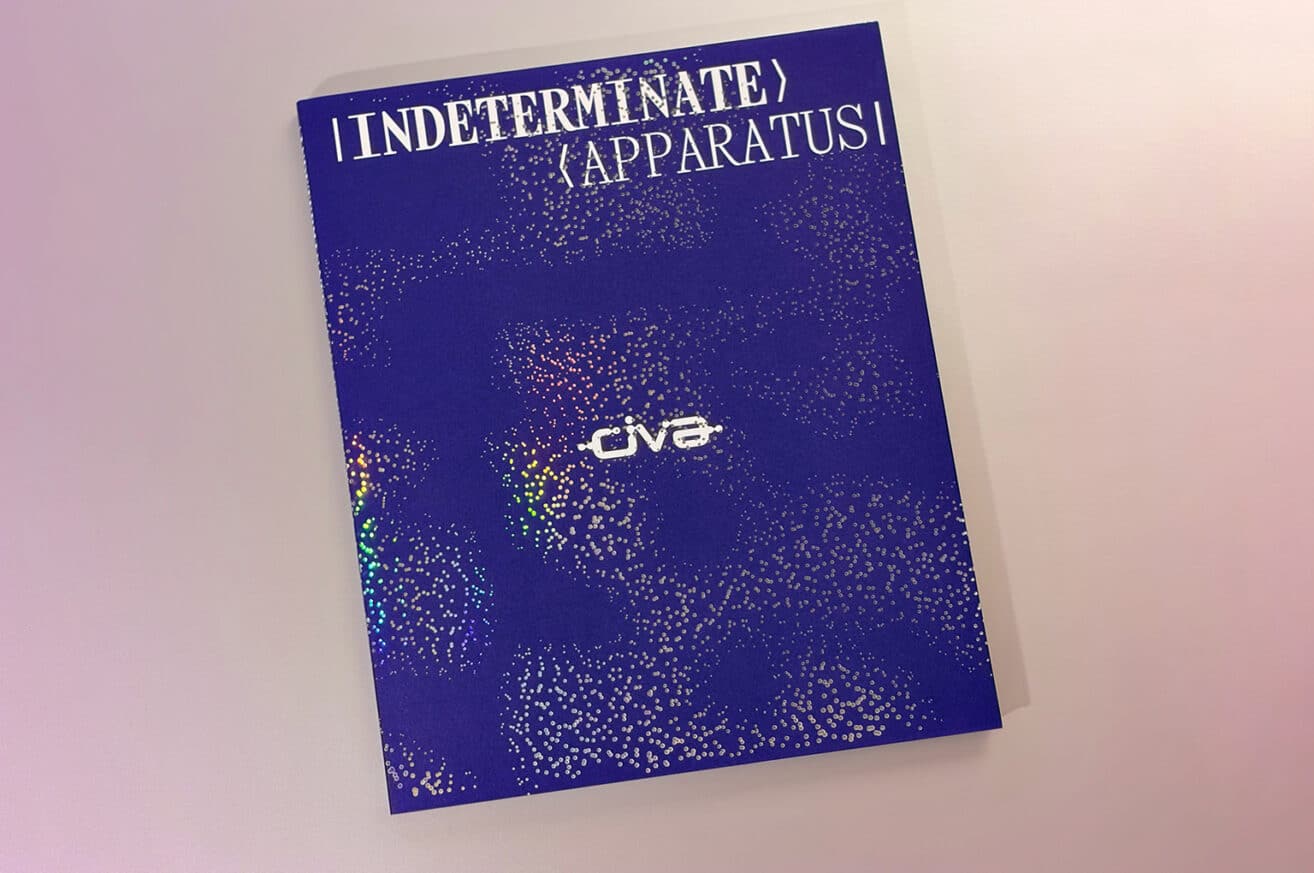
At first encounter, the book’s exterior already signals that this is no ordinary exhibition catalogue. The protective cover, crafted from Invercote G 180g, is delicately laser-cut with a constellation of star-shaped openings. These perforations are not merely decorative, they act as apertures, revealing glimpses of the Mirror Hologram 330g cover beneath. The effect is quietly spectacular.
As light moves across the surface, the holographic layer shifts and refracts, producing a fluid spectrum that recalls oil slicks, soap bubbles, or iridescent glass.
As light moves across the surface, the holographic layer shifts and refracts, producing a fluid spectrum that recalls oil slicks, soap bubbles, or iridescent glass. What appears subtle at rest becomes dynamic in motion — echoing the unstable, probabilistic nature of quantum states. The design transforms the book into an apparatus in itself: perception changes depending on position, light, and interaction. Mirror Hologram (previously featured here), a newer addition to the holographic paper family alongside tones like Silver, Gold, and Pillars of Light, proves particularly fitting here. It captures that elusive balance between restraint and spectacle — soft and atmospheric in ambient light, yet vividly expressive under direct illumination.
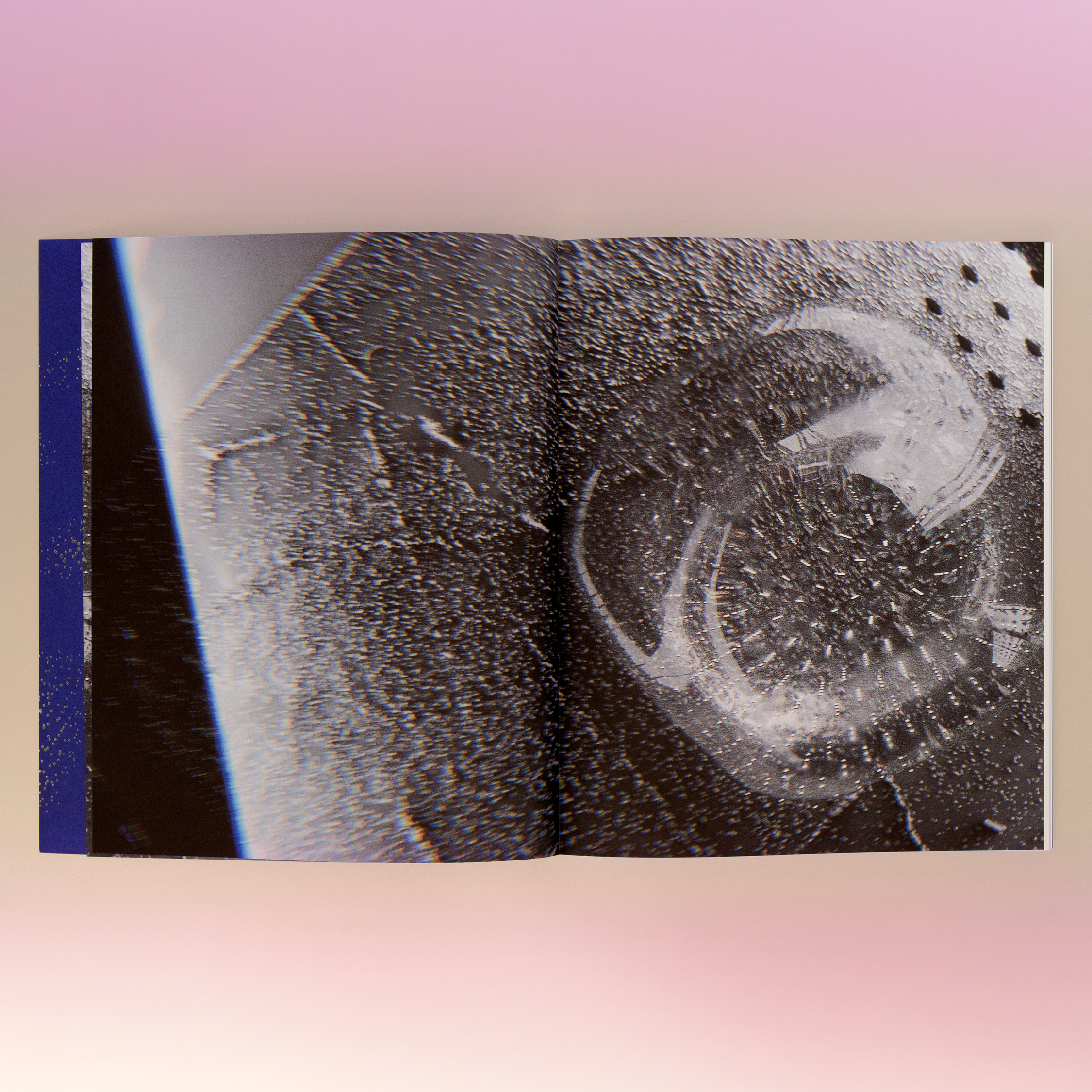
Inside, the tactile experience continues with Munken Polar Rough 120g, a paper choice that grounds the otherwise shimmering exterior. Its uncoated, slightly textured surface offers a calm counterpoint, inviting slower reading and reflection. This contrast between exterior brilliance and interior softness feels intentional. It mirrors the exhibition’s tension between the measurable and the unknowable, the observed and the imagined.