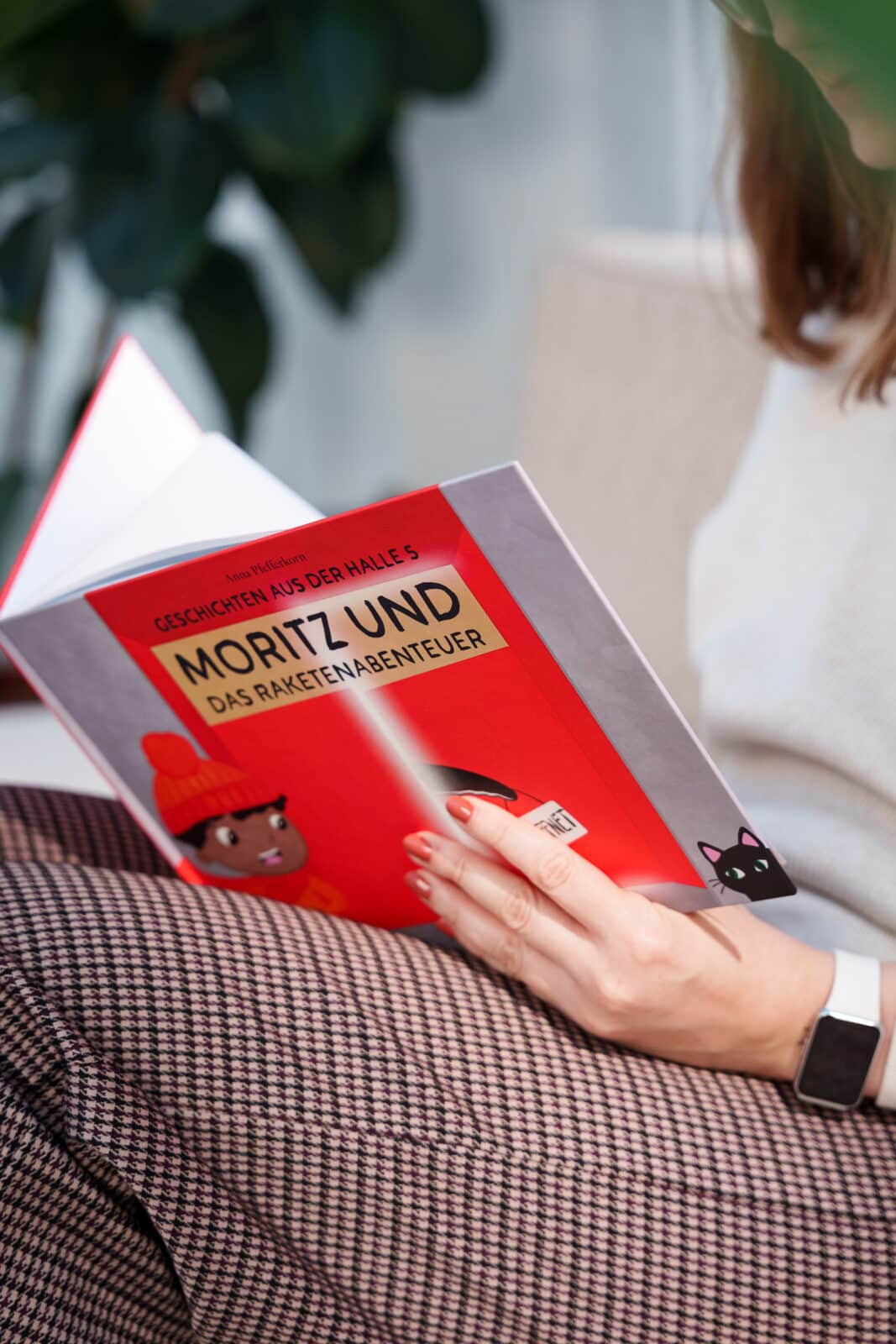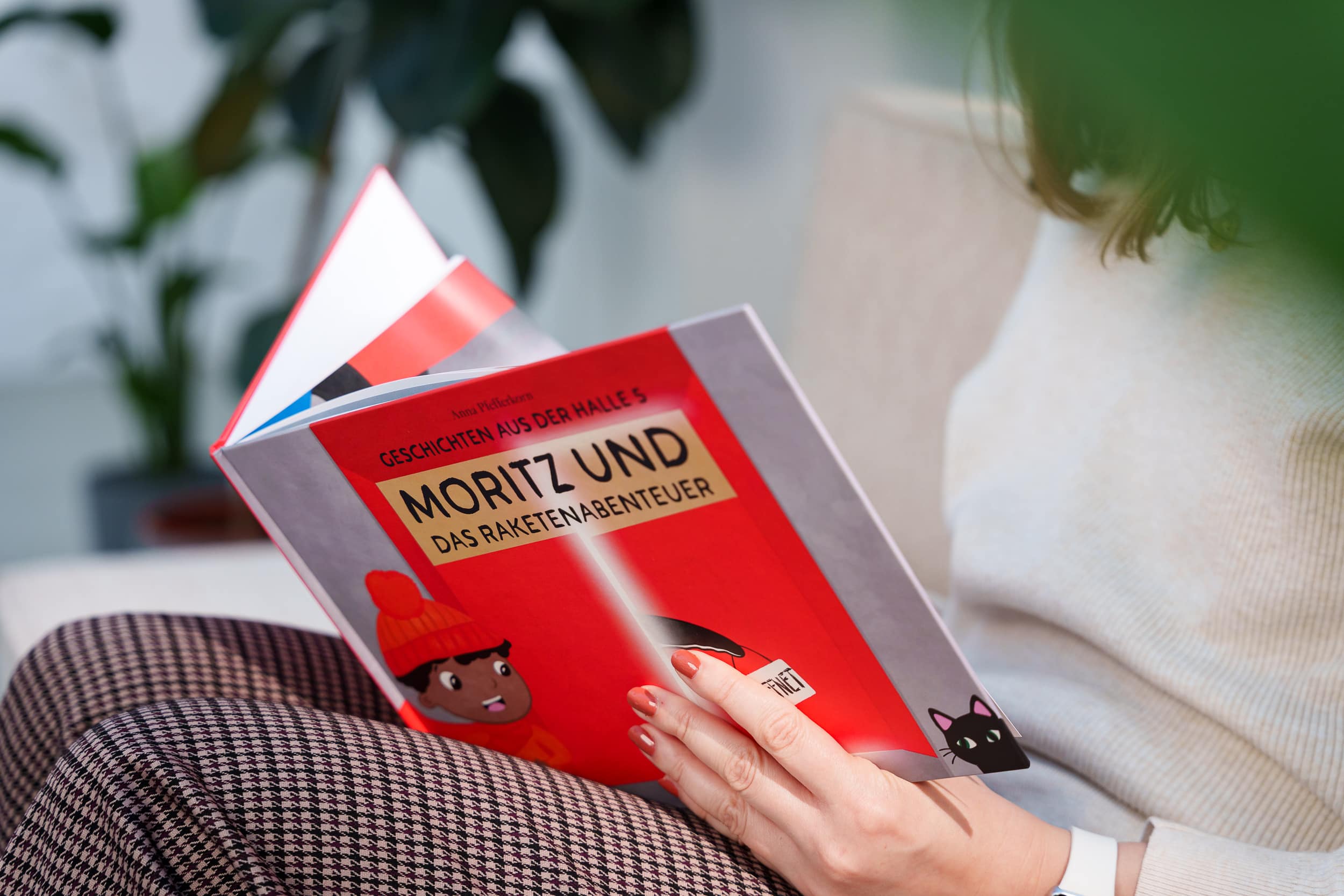
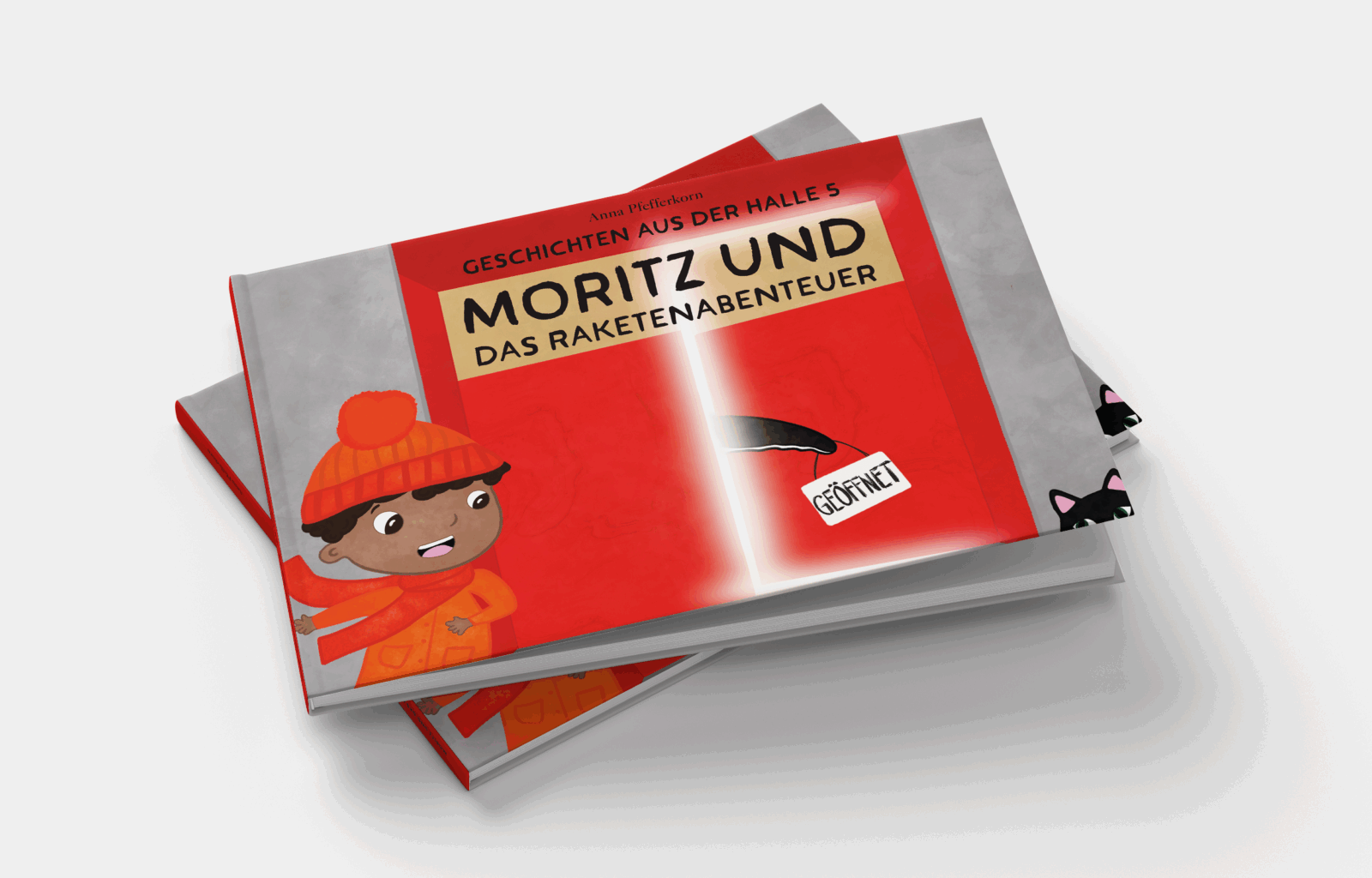
A penguin — right in the middle of the city? And what is hidden behind the mysterious doors of Hall 5? With Moritz and the Rocket Adventure, communication designer Anna Pfefferkorn introduces the first volume of her planned children’s book series, Stories from Hall 5. The book tells the story of Moritz, a boy who follows a mysterious trail one winter night that leads him to a very special place: Hall 5. There he meets a group of children and their extraordinary animal companions — the cheerful penguin lady Pina, the wise artist walrus Winfried, and the clever craftsman badger Dietmar. Moritz quickly becomes part of the community. Together, the friends set out to build the fastest rocket in the world. But will their ambitious plan succeed? More than an adventure story, this publication is a thoughtful design project that brings together narrative, material, and concept in a way that feels both playful and profound.
A Bachelor Project with an Open Door (and Invitation) to Creativity
The book was created as part of Anna Pfefferkorn’s bachelor’s thesis in the InterMedia program at FHV Vorarlberg. The young designer believes that good design should not only be aesthetically pleasing but also touch, surprise, and connect. And this ethos has become a central theme in her practice in making complex topics accessible through design— an approach that directly shaped Stories from Hall 5.
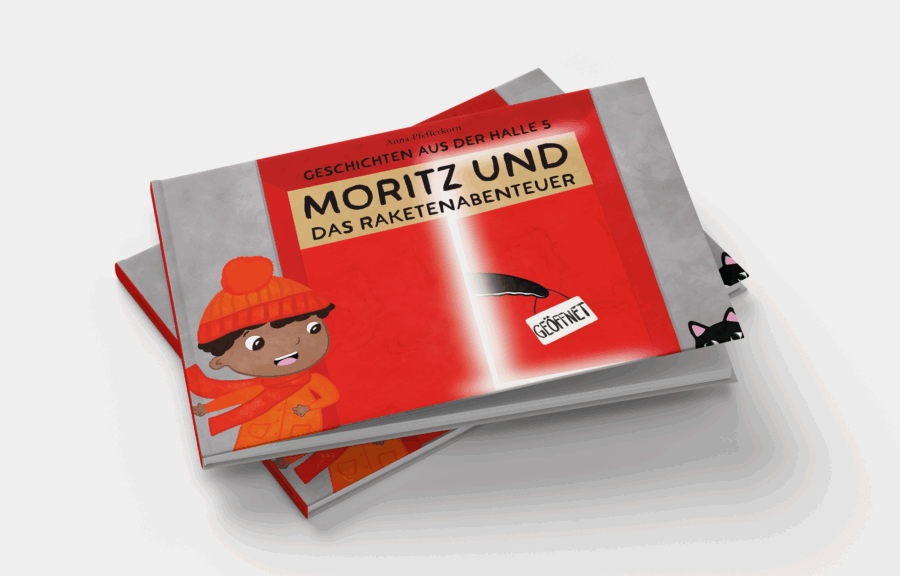
At the core of the book lies a powerful question: how can creative places be made more visible? Especially those that many people don’t know about or don’t dare to enter? “That’s why the cover already shows an open door,” Anna explains. “It is meant to spark curiosity and give the feeling of being allowed to step inside — of being allowed to be who you are, without needing to meet expectations or standards.”
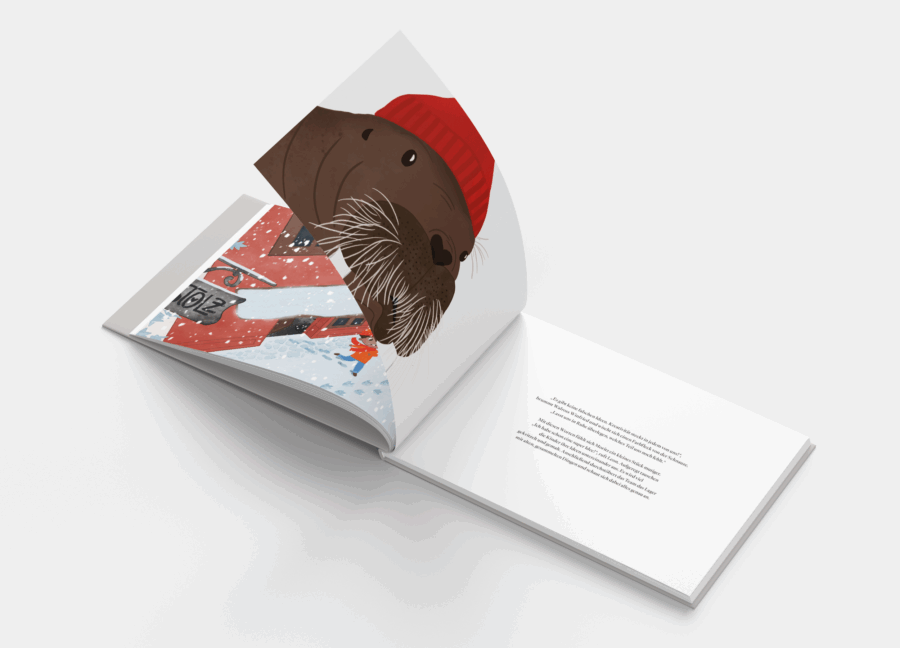
This invitation continues throughout the book. Rather than focusing on polished results, the narrative celebrates experimentation and collaboration. The children in Hall 5 try things out, make mistakes, and discover solutions together. “It was important to me to show that creativity is not something some people “have” and others don’t, but something that emerges between people,” Anna says. The illustrations reflect this philosophy. They are intentionally simple and warm, and Hall 5 feels more like an adventure playground than a traditional art space. The story encourages dialogue and invites children to continue creating beyond the final page. “In a way, the story only begins to continue after the reading is over.”
Designing for Children: Clarity, Honesty, Joy
For Anna Pfefferkorn, designing for children requires a special kind of clarity. “Designing for children means thinking much more clearly and honestly. Children immediately notice when something is off or simply looks nice. The story, the images, and the emotion must align—otherwise, it doesn’t work.” This honesty leads to reduction: simple language, clear imagery, and space for imagination. At the same time, children allow for boundless creativity.
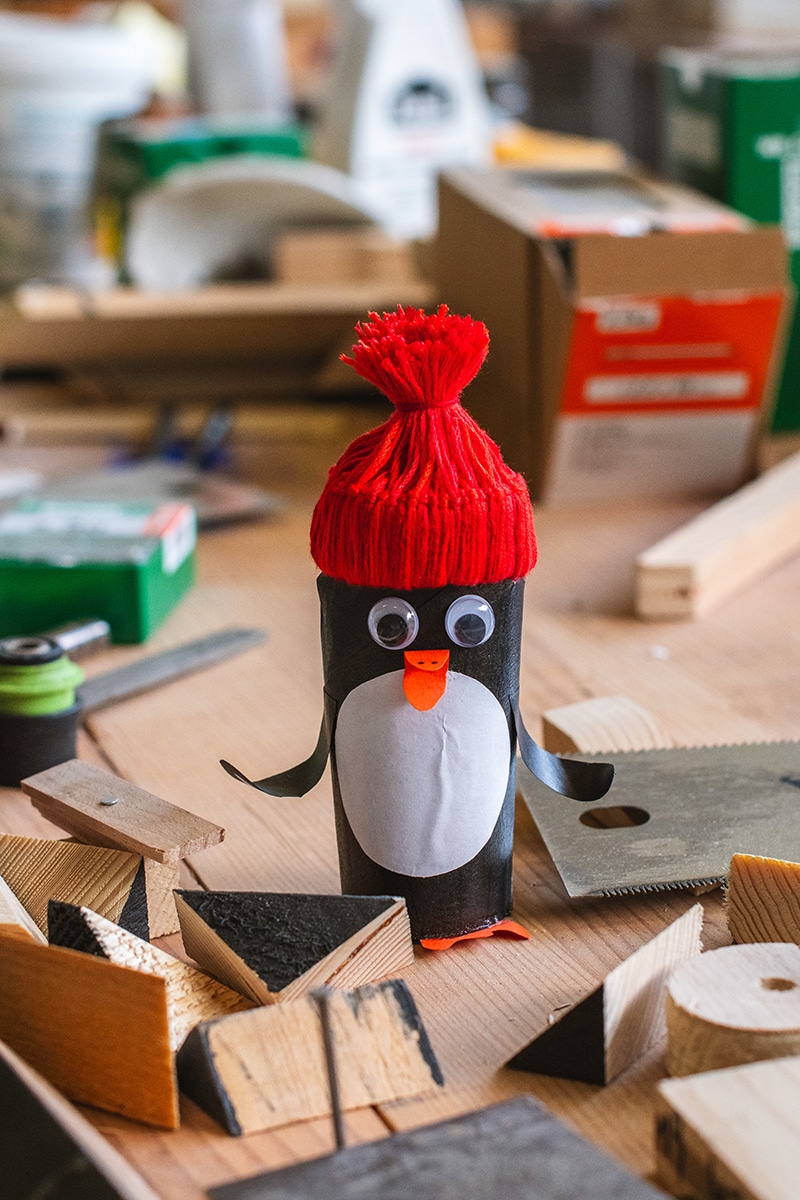
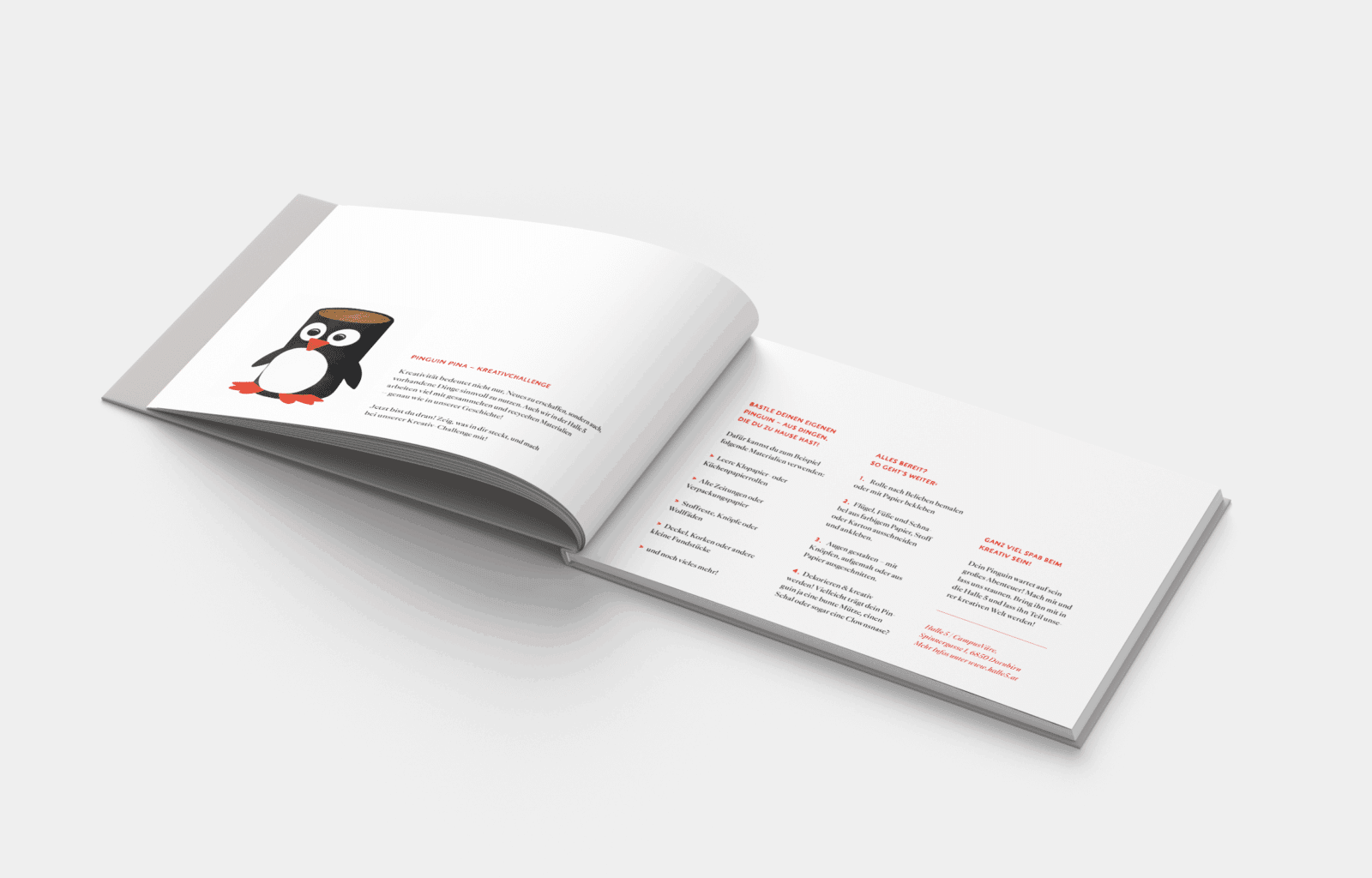
“You can be much more playful because children don’t categorize things yet. A penguin in a workshop is simply accepted.” And what makes children’s books so rewarding? “The greatest joy for me is that children react very directly. They don’t read analytically; they experience. When they laugh, ask questions, or want to build something afterward, you immediately see that the story continues to live on — and that is what makes children’s books so special.”
Material as Message
The physical book plays a crucial role in the overall concept. For the interior pages, Anna chose the recycled paper Impact by Lenzing Paper, sourced from Europapier. She selected a material that immediately convinced her both visually and haptically. Impact is made entirely from recycled fibres and stands out for its impressive whiteness and high opacity, which allow the illustrations to remain bright and clearly differentiated in color.
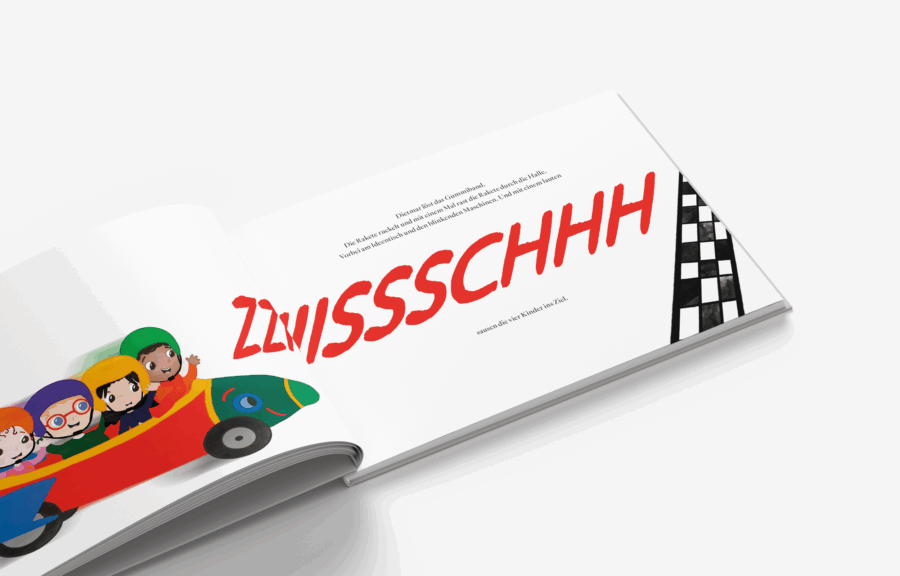
“The idea of ‘re-use’ also plays a role in the story itself, so it was important to reflect this concept in the material choice,” Anna explains. “At the same time, the paper needed to appear calm and bright despite its recycled nature so the illustrations would come across clearly.” She is very satisfied with the performance: the pages feel pleasant to the touch and remain robust in everyday use. At the end of the book, a short note explains the paper choice. An intentional decision to highlight that material is not merely technical, but conceptual. The book is designed not only to tell a story but also to serve as an object that carries forward the idea of sustainability and the creative re-use of resources.
Durability was key in the finishing process. The cover received a matte, scratch-resistant finish to ensure it remains stable and pleasant to handle, even after frequent reading and transport in children’s bags. The book is thread-stitched, allowing it to open flat and stay open during read-aloud moments, also an important functional detail that enhances the reading experience. In this way, Moritz and the Rocket Adventure becomes more than a storytelling medium. It is a carefully crafted object, designed to withstand everyday life while supporting the narrative and its message.