
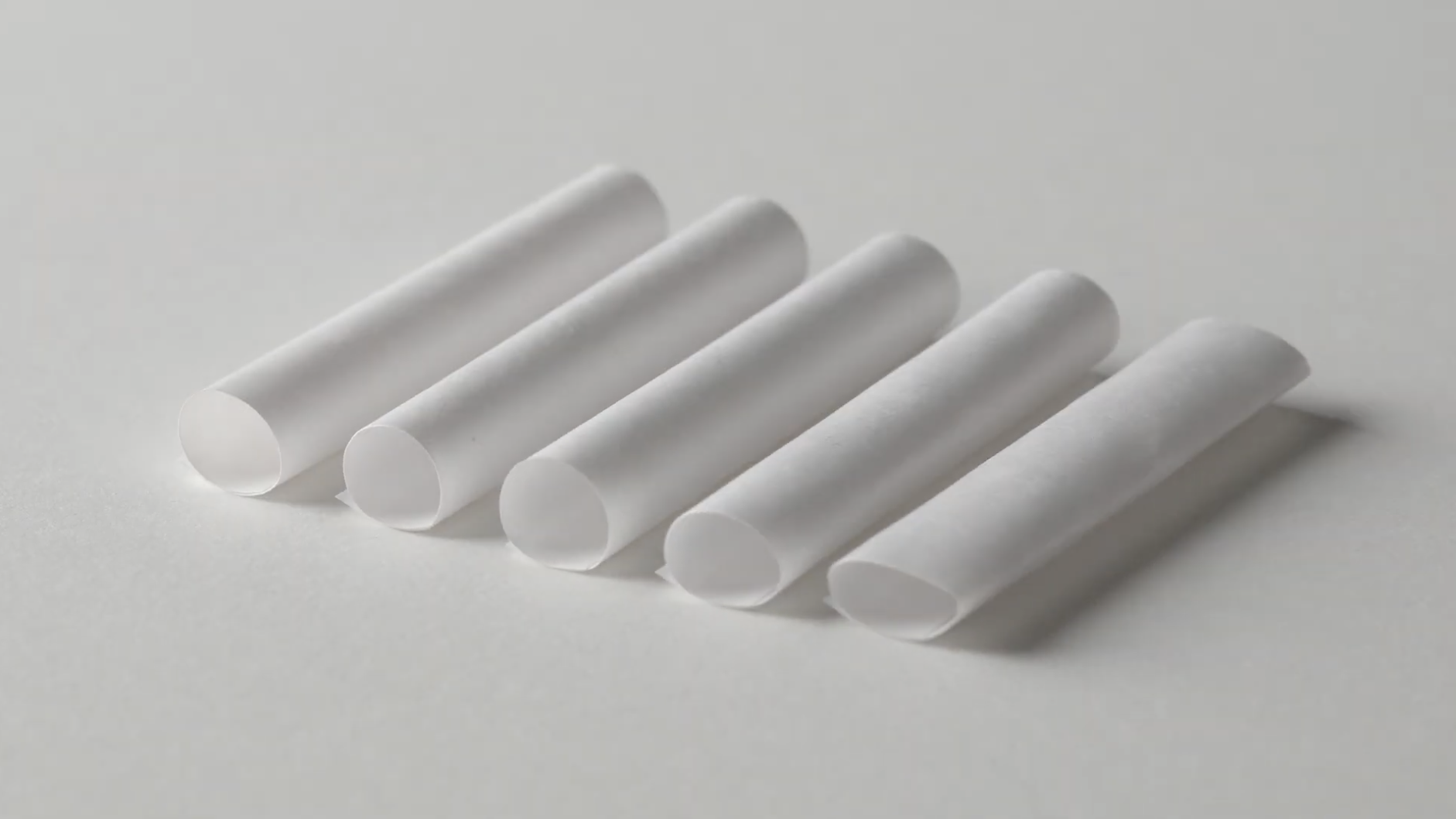
In the hands of Japanese designer and artist Tomohiro Okazaki, a simple sheet of paper becomes something unexpectedly alive. Through meticulous stop-motion animation, paper bends, folds, arches, and twists, forming rhythmic movements that feel almost organic.
Okazaki is a graphic designer and the founder of the Tokyo-based design studio SWIMMING. While his background is rooted in graphic design, his work often moves beyond static visuals, exploring how materials, typography, and motion can interact.
His ongoing experimental series Paper Study perfectly captures this approach. Using only plain white paper, Okazaki creates short animations where sheets appear to move independently, curling into loops, forming temporary geometric structures, and unfolding again into flat surfaces. Through careful frame-by-frame manipulation, the paper behaves almost like a living object — stretching, breathing, and transforming in quiet, hypnotic sequences. The simplicity of the material is essential: by removing color and visual distractions, Okazaki focuses entirely on the physical qualities of paper itself — its flexibility, tension, weight, and memory.
Through careful frame-by-frame manipulation, the paper behaves almost like a living object—stretching, breathing, and transforming in quiet, hypnotic sequences. The simplicity of the material is essential: by removing color and visual distractions, Okazaki focuses entirely on the physical qualities of paper itself—its flexibility, tension, weight, and memory.
In the animation, the paper behaves like a mechanical organism, curling into loops and unfolding into rhythmic sequences before dissolving again into two-dimensional form. The beauty of the series lies in its restraint. The artist reveals how something ordinary can become extraordinary when viewed from a different perspective.
Through these small but captivating experiments, Okazaki reveals the expressive potential hidden in everyday materials, reminding us that even the simplest sheet of paper can become a medium for movement, curiosity, and discovery.
You are currently viewing a placeholder content from YouTube. To access the actual content, click the button below. Please note that doing so will share data with third-party providers.
More InformationVideo © SWIMMING