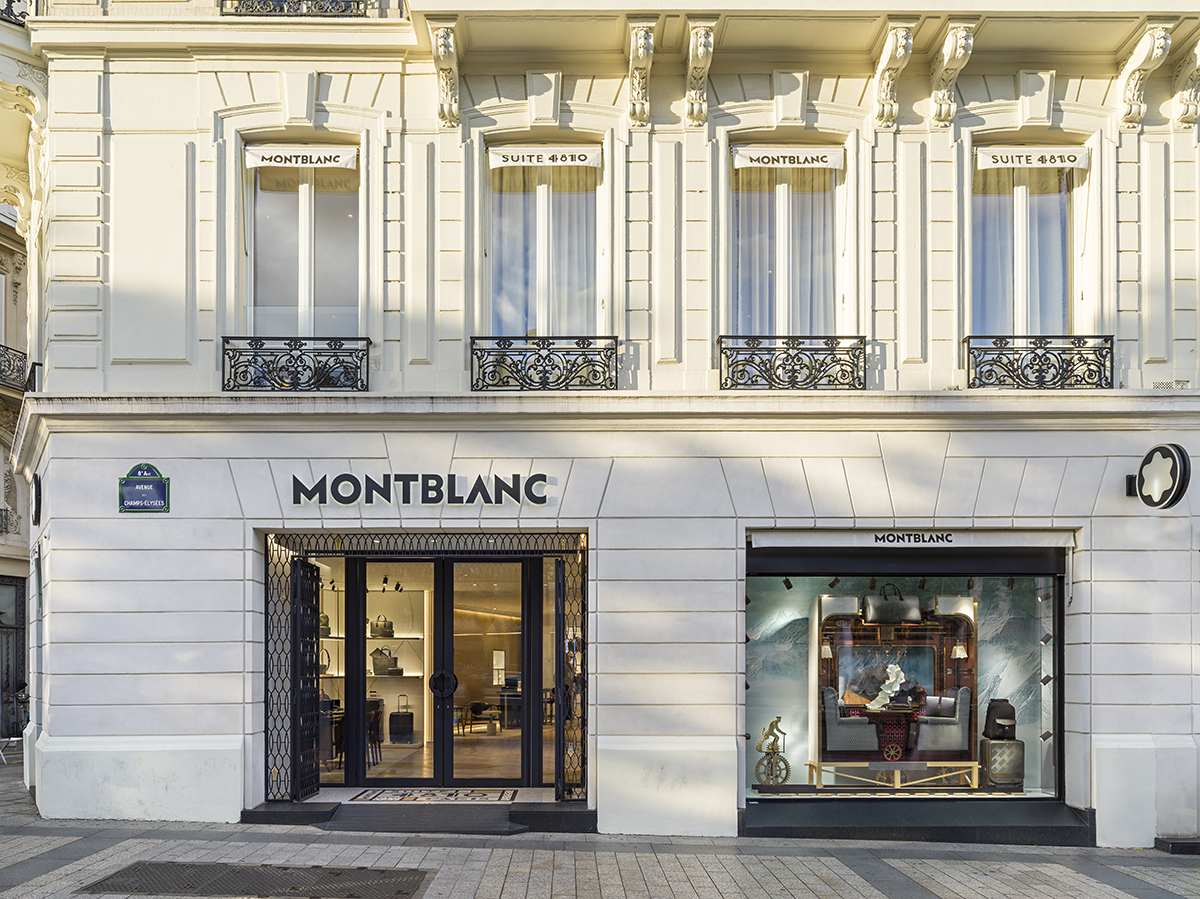
Montblanc‘s new global campaign, Let’s Write, directed by Wes Anderson, is a vivid cinematic ode to writing, travel, and creativity. In the short film, Anderson constructs a surreal setting of the Montblanc Observatory High-Mountain Library, where a theatrical train carriage, the Voyage of Panorama, passes through imagined landscapes as the characters reflect on what writing means: its power to pause time, to inspire curiosity, to record thoughts, and to connect. Characters played by Wes Anderson himself, Rupert Friend, Michael Cera, Waris Ahluwalia, and Esther McGregor join in this poetic, quiet celebration of putting pen to paper. Watch the short film here.
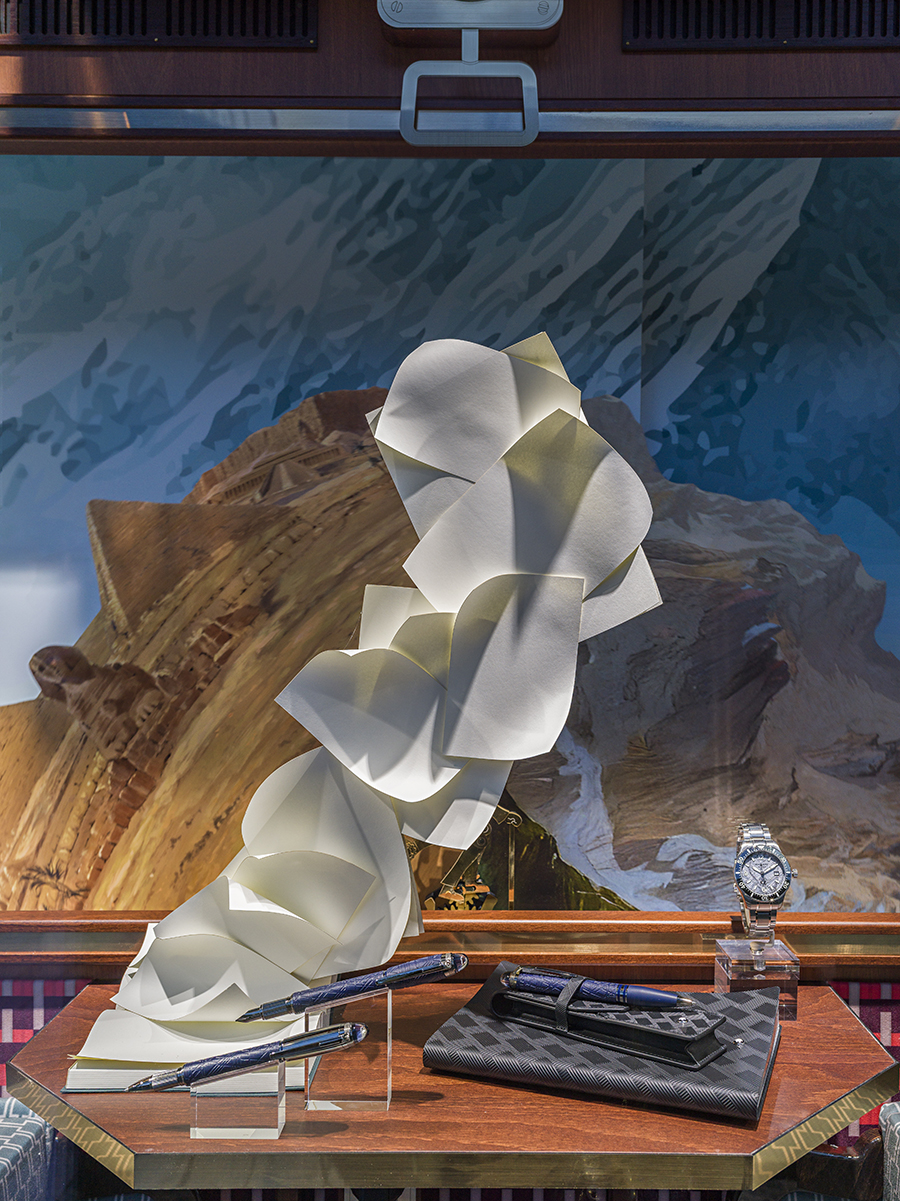
Within this cinematic world, Montblanc’s iconic objects appear as unobtrusive companions to the story: the Meisterstück fountain pen, the Schreiberling (designed by Anderson), a Portable Writing Table, a Writing Traveler Bag, and a Minerva Pocket Watch. These items act as artifacts of craftsmanship and ritual, reinforcing the Maison’s legacy of craftsmanship and its relationship to writing as both ritual and creativity.
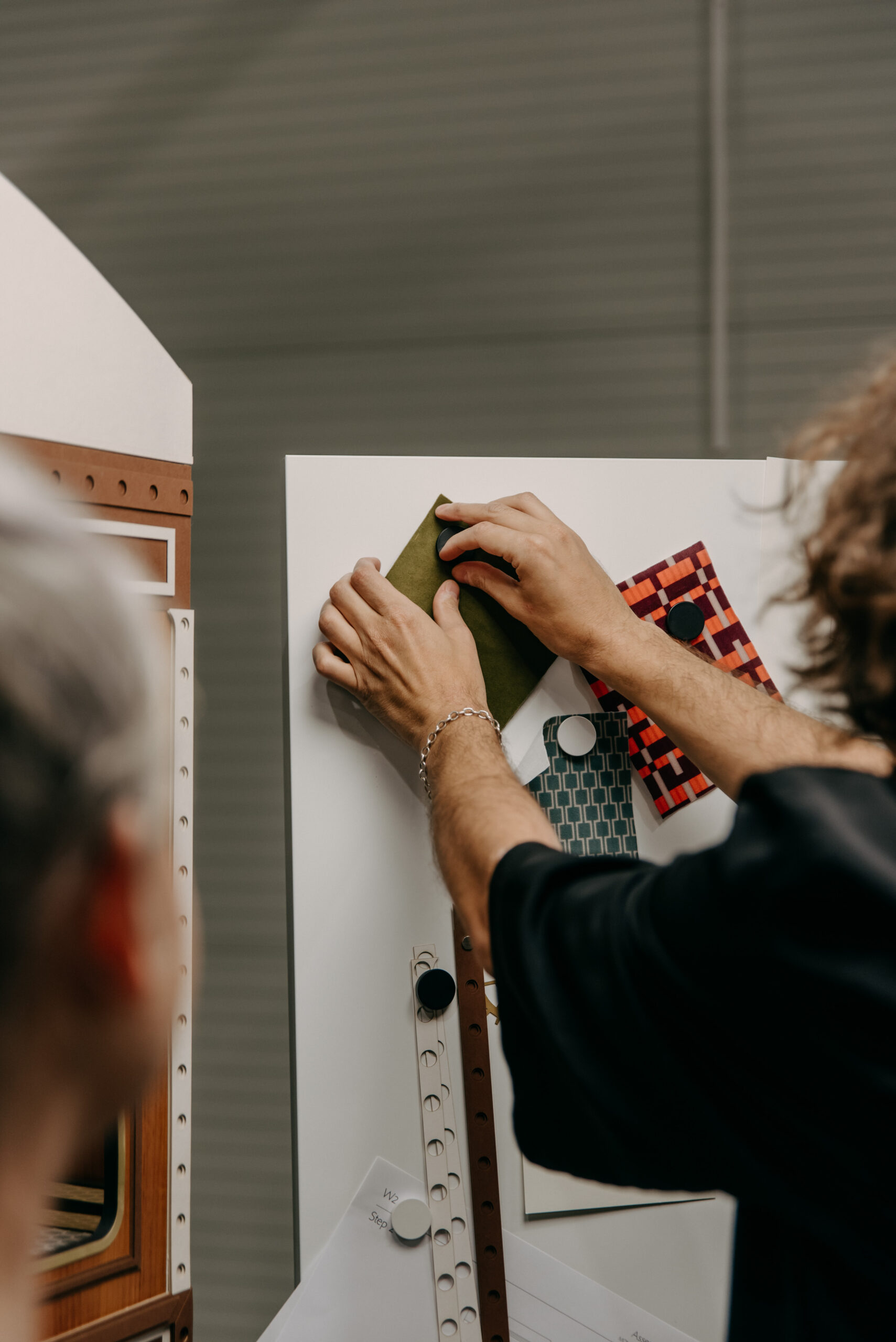
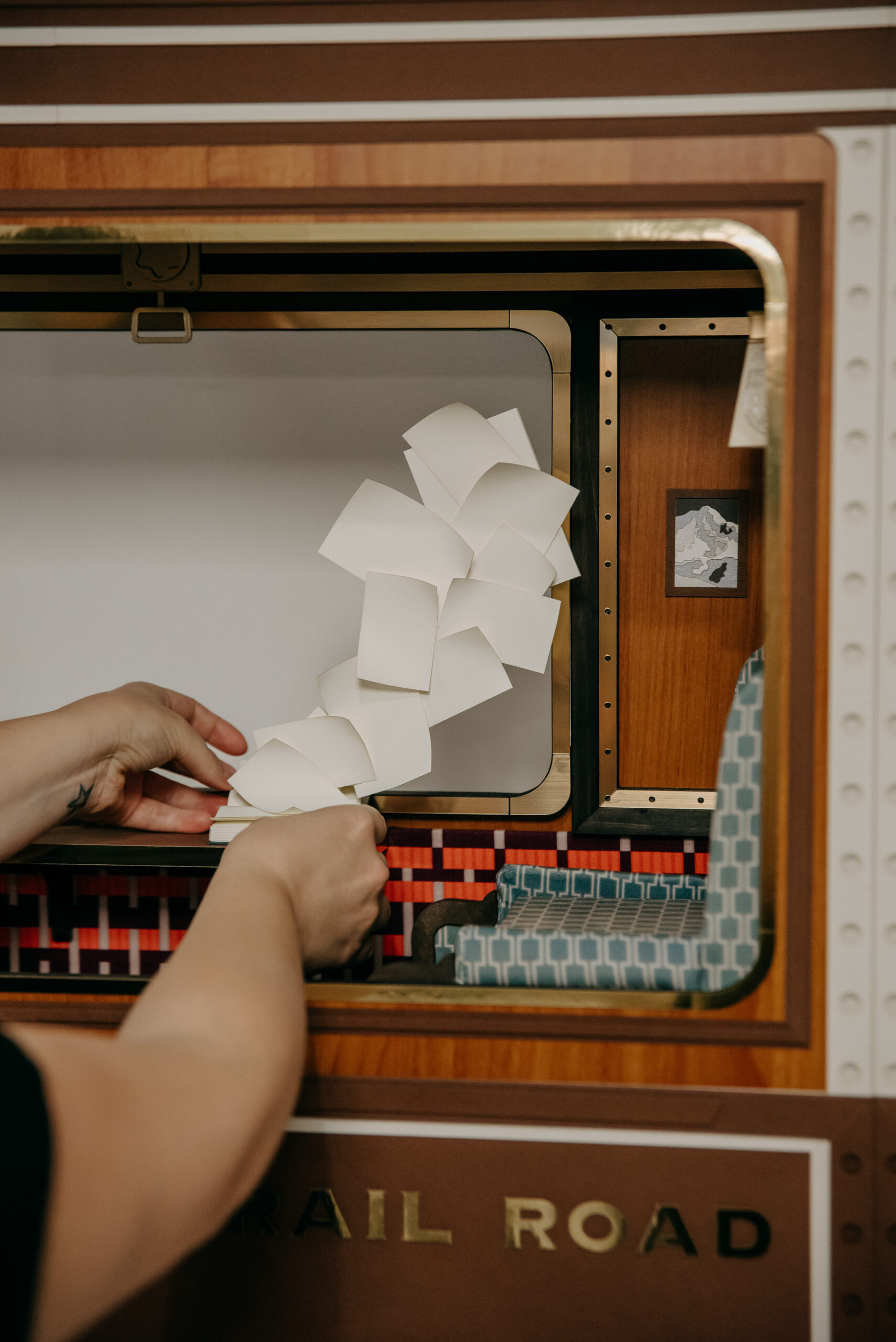
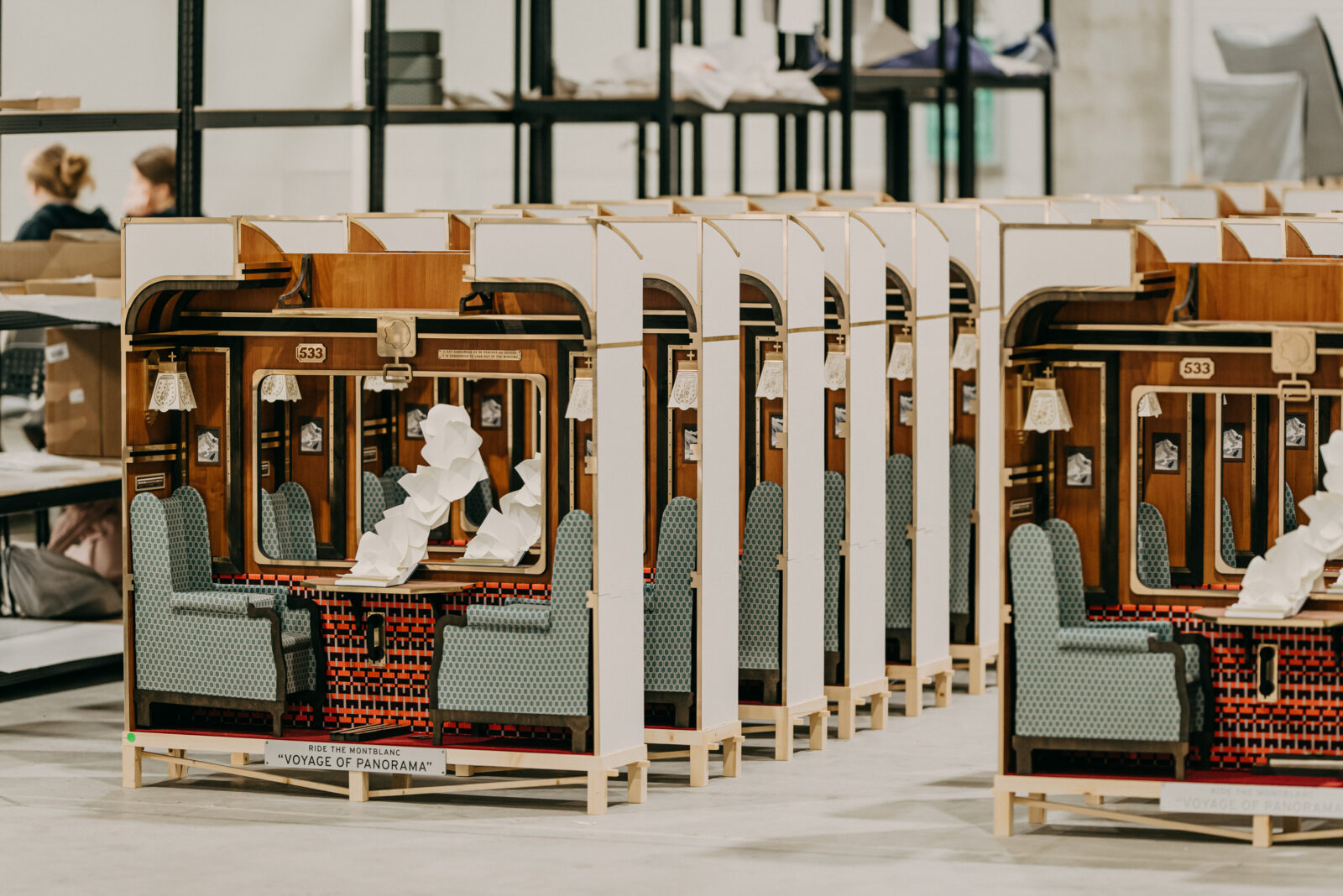
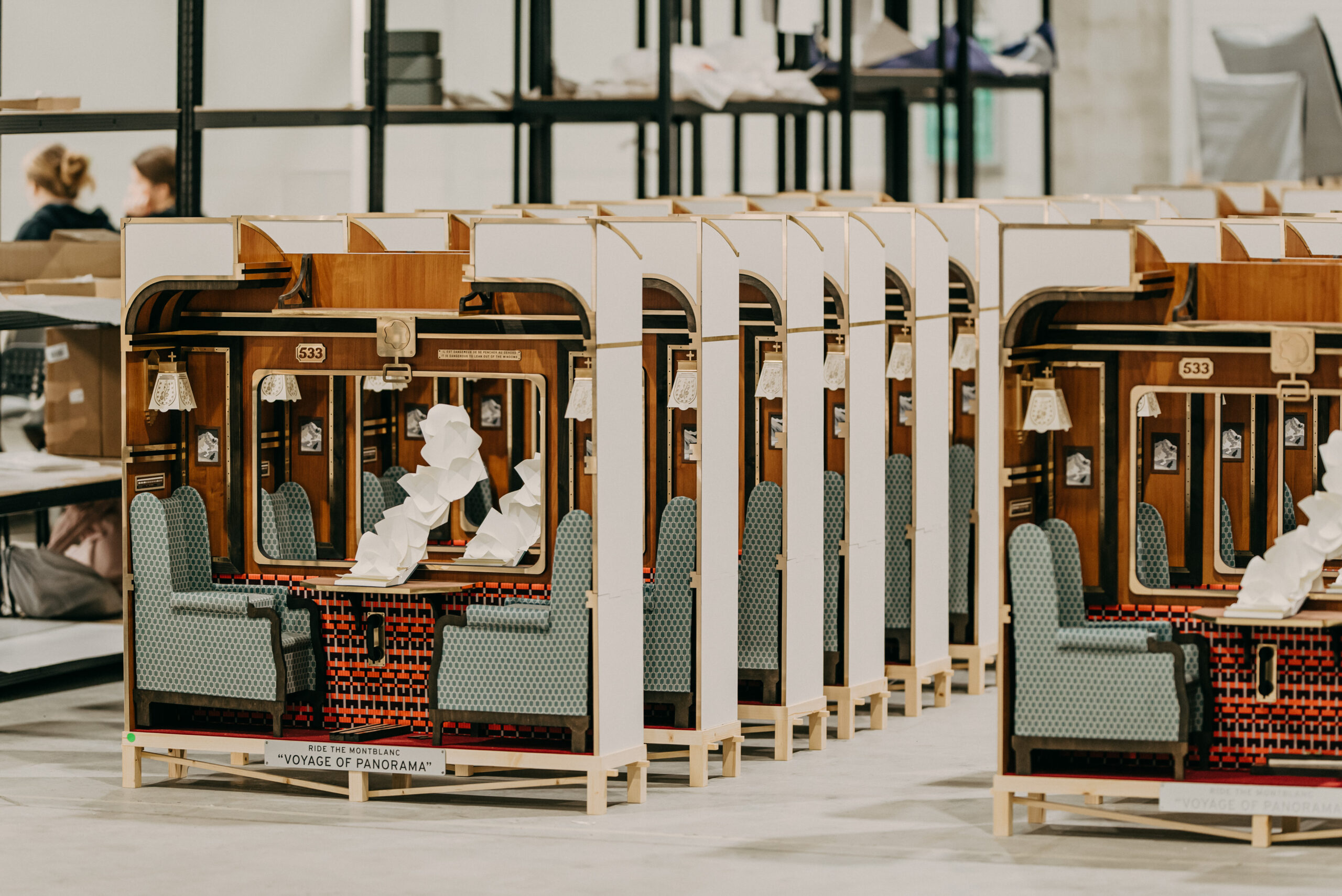
Edinas Paper translated Anderson’s cinematic universe into a tangible installation, with a fully realized paper-and-wood crafted train carriage echoing the Voyage of Panorama.
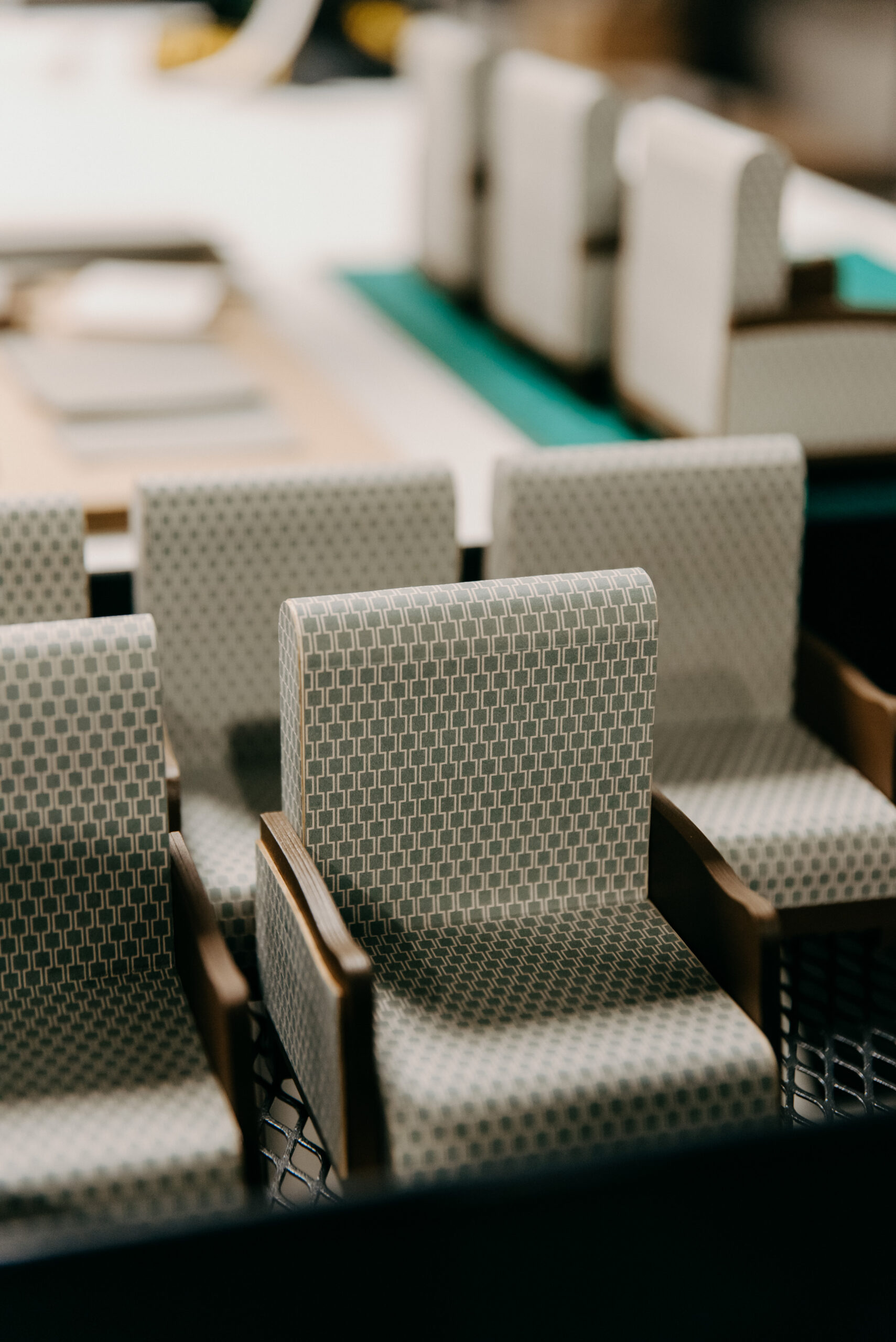
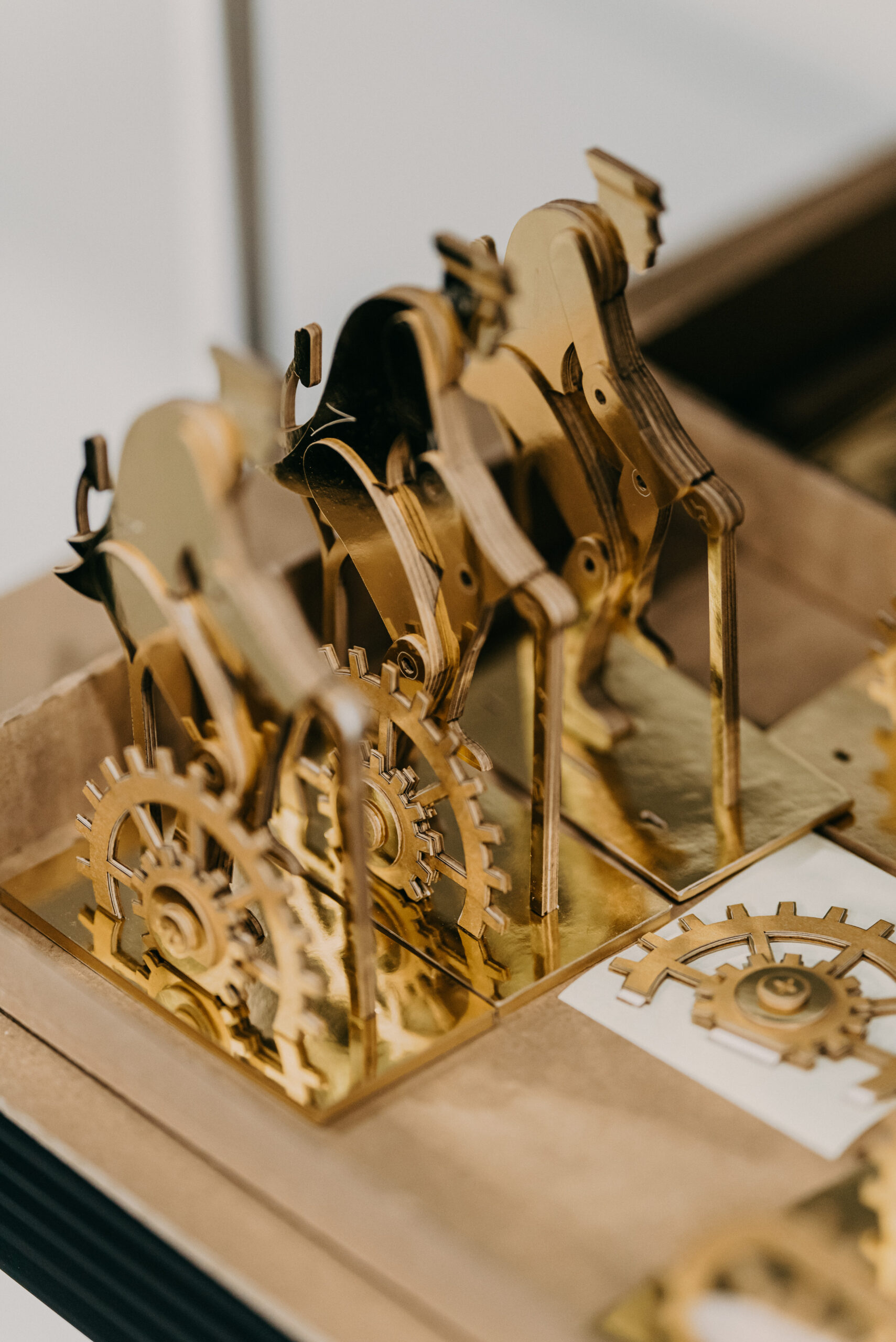
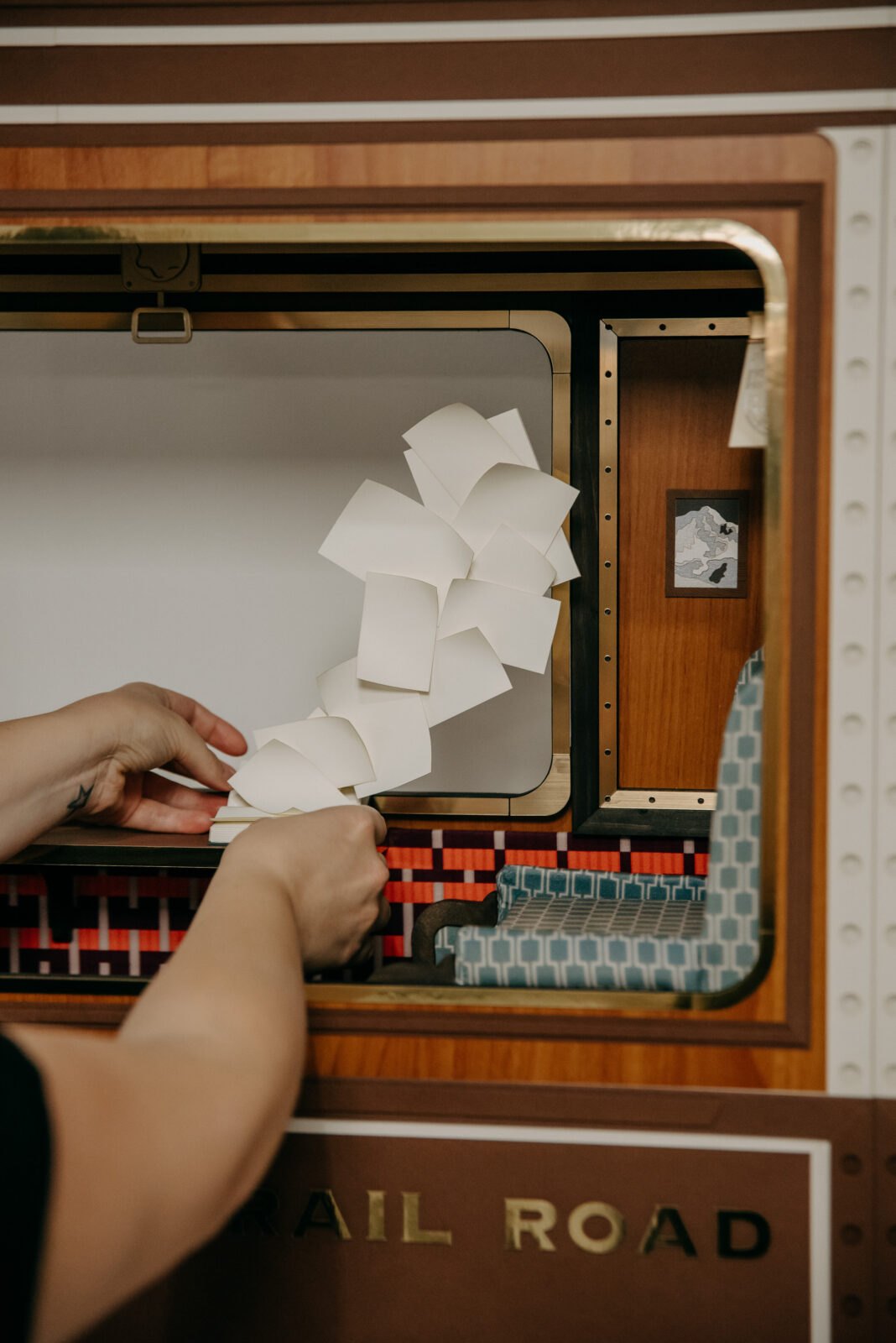
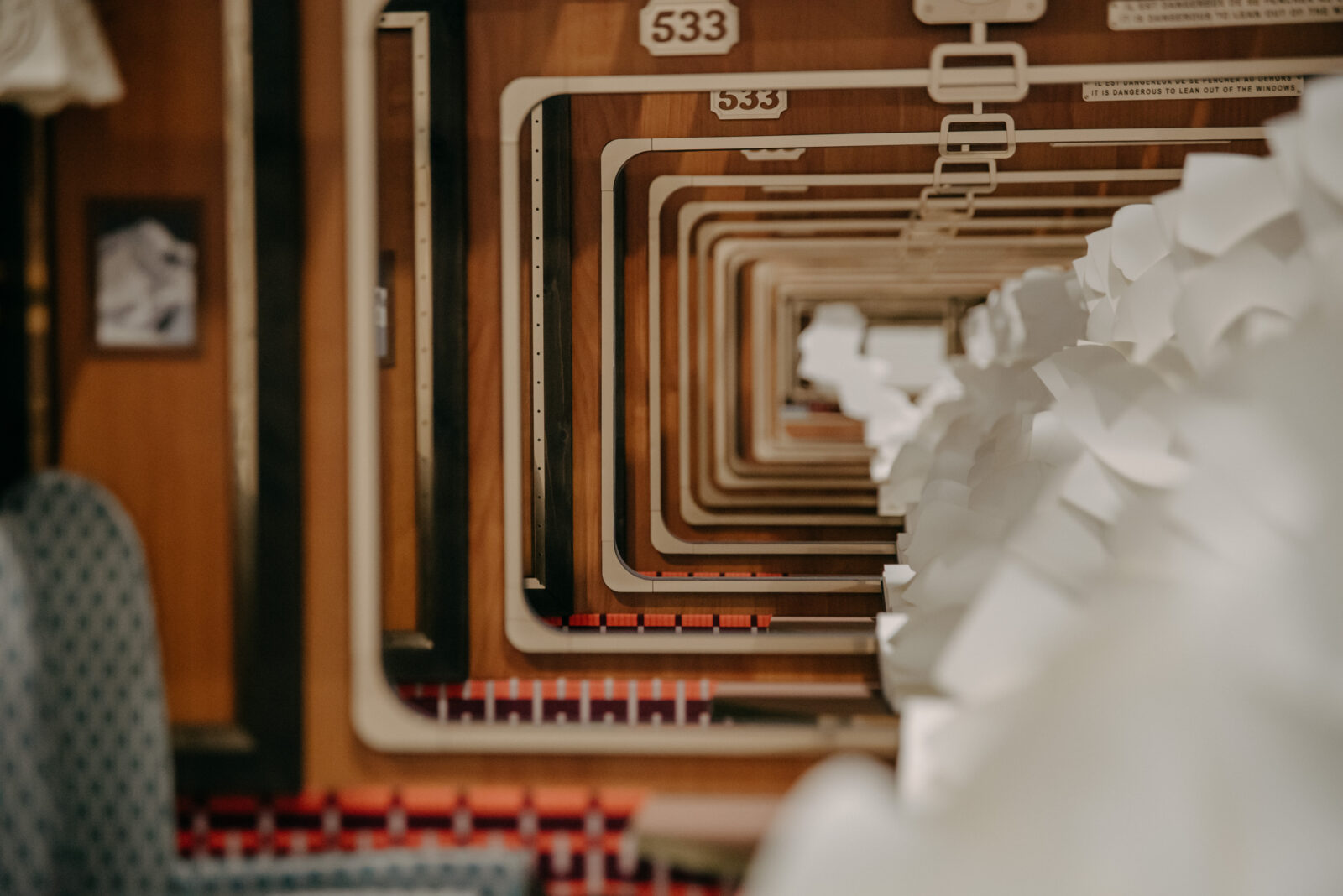
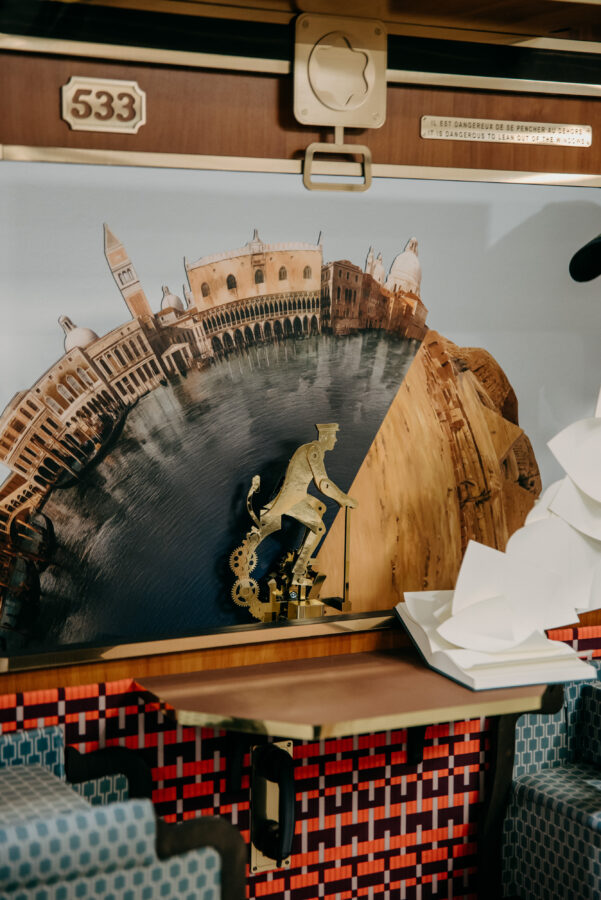
Concept developed by Montblanc’s Brand Experience Team was translated into a three-dimensional representation by StudioXag, and then brought to life through paper implementation for a window display campaign by Budapest-based paper design studio Edinas Paper (whose work we’ve featured before here). The studio translated Anderson’s cinematic universe into a tangible form, with a fully realized paper-and-wood crafted train carriage echoing the Voyage of Panorama. The team at Edinas Paper imagined what it would mean to step inside the carriage and experience travel through layered tactility: windows and arches, curved panels, and rhythmic sequences of detail, all built through an interplay of paper and delicately cut wooden elements.
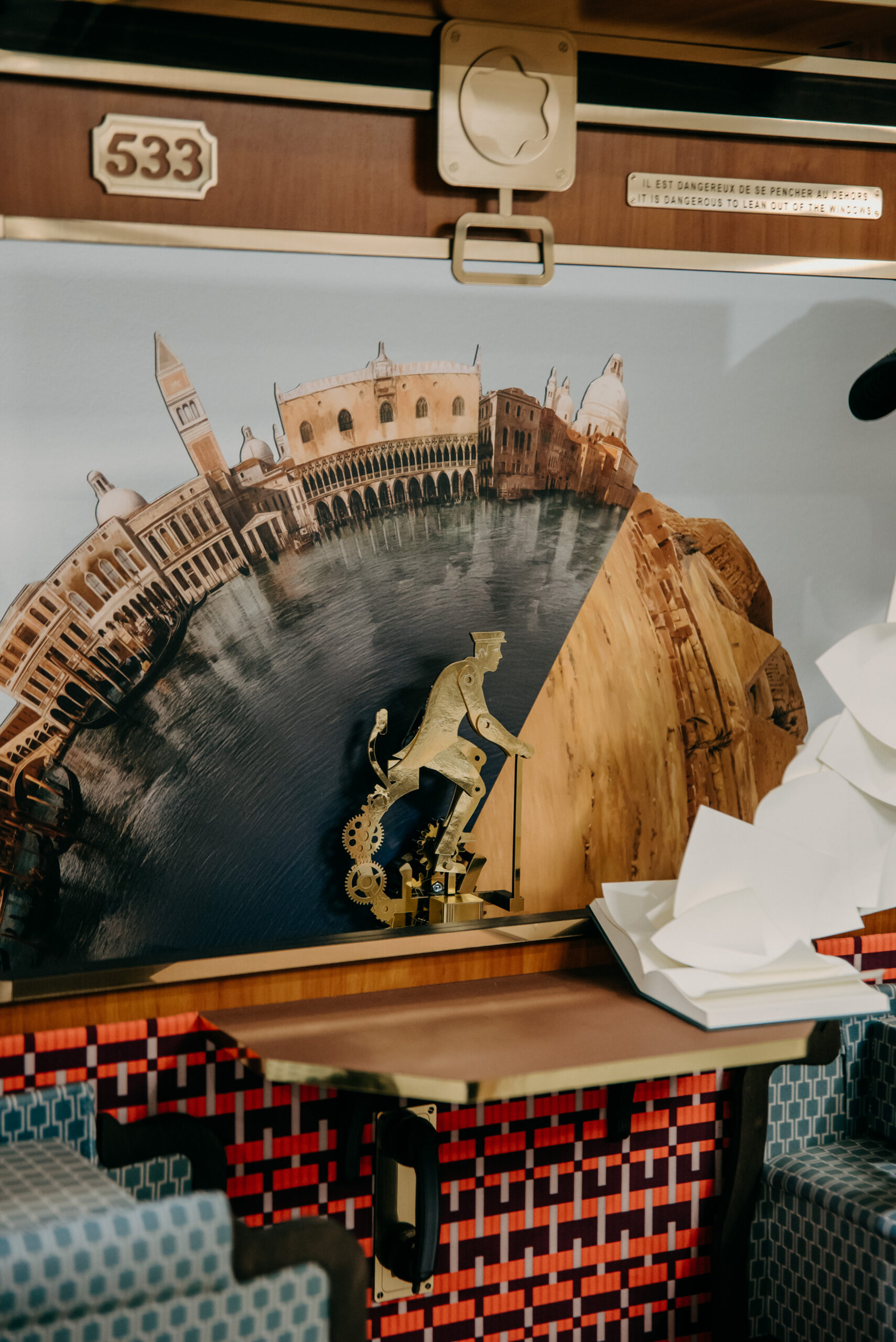
Inside the train, a paper cyclist travels across the panoramic backdrop, connecting each vignette and offering a nod to the Let’s Write campaign’s spirit of movement and curiosity. “He became the bridge between imagination and reality — between story and storyteller,” says Edinas Paper, explaining how a whimsical narrative gesture can anchor a spatial installation.