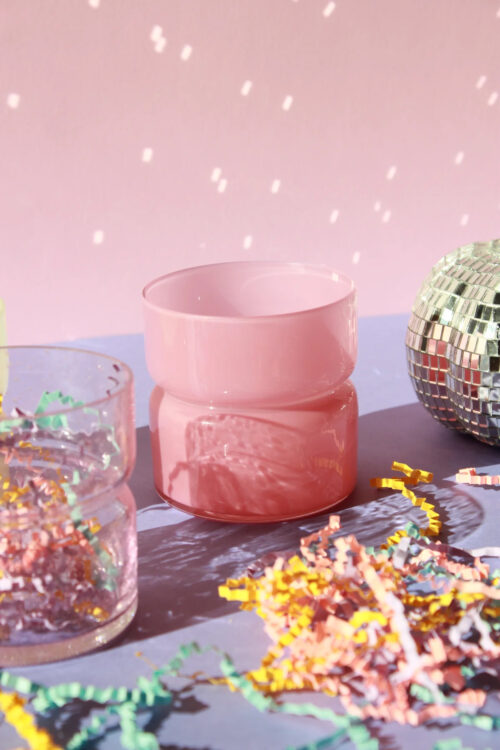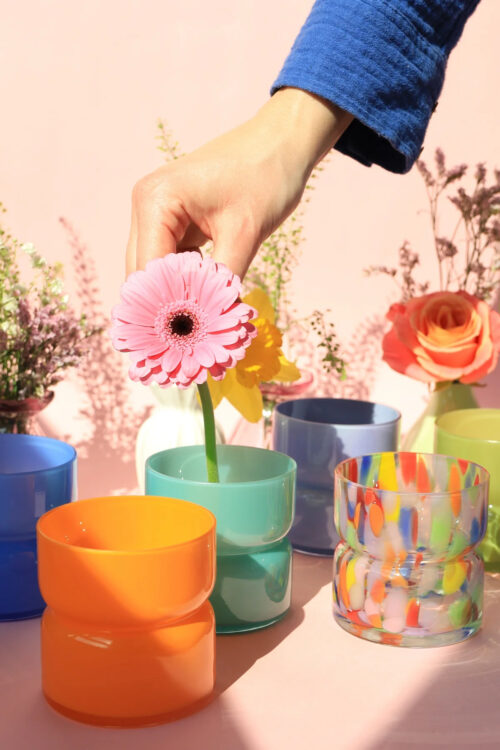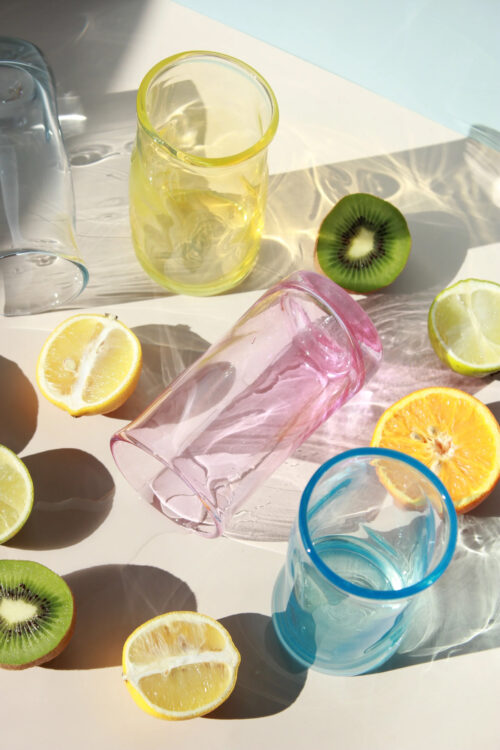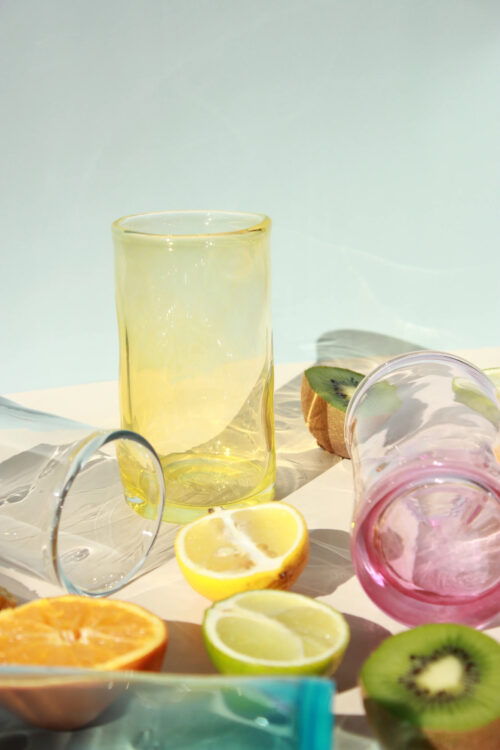
There is something quietly appealing about creating beautiful objects that ask to be used, not just exhibited. With lorki glass, founder and designer Magdalena Czarnowska repositions artisan-crafted blown glass from a ceremonial object to an everyday companion—playful, imperfect, and full of colour.
Trained as an architect, Czarnowska’s path to glass was neither accidental nor abrupt. Years spent in architectural practice sharpened her sensitivity to proportion, detail, and material integrity. Yet alongside this developed a growing desire for independence and creating something of her own, in addition to her job. “Architecture is a beautiful discipline, but at times I felt I was missing independence and a stronger sense of agency,” she reflects. Glass, long admired from a distance, gradually became the medium through which she could shape her own narrative.
Over the past decade, beautiful handmade ceramic mugs have quietly entered our daily rituals, transforming something as ordinary as a morning coffee into a small aesthetic moment.
What once felt niche or precious is now part of everyday life—used without hesitation, touched, washed, and reached for instinctively. Magdalena sees blown glass in much the same way: not as an object to be “saved,” but as something that can accompany daily habits with ease and pleasure. 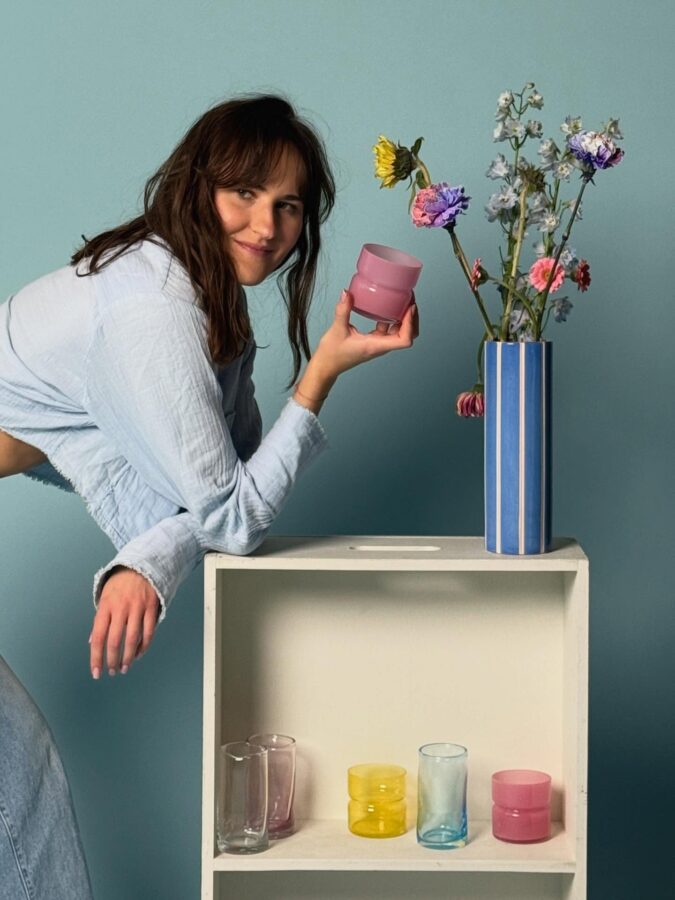
Just as ceramic mugs taught us to value craftsmanship in the most routine moments, lorki glass invites blown glass back onto the table—where design, ritual, and everyday use naturally meet.
From Architecture to the Furnace
Magdalena Czarnowska’s architectural background continues to shape her approach, particularly in how she collaborates. Designing glass is not a solitary gesture but a dialogue—between drawing and material, intention and spontaneity, designer and craftsperson. Working with a Polish glassworks in the Podkarpacie region, she oversees the entire production process, from the early sketches on paper, to 3d rendering, to form development to the smallest finishing detail, such as the hand-written thank you card received with the order delivery.
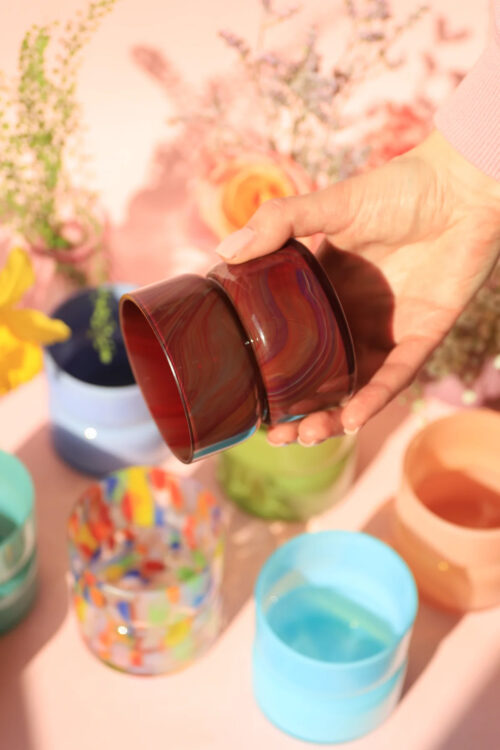
What drew her in was glass’s contradiction: its fragility paired with its molten freedom. “In its molten state it’s incredibly malleable and almost limitless,” she says. Each piece is blown and finished by hand, which means variation is not a flaw but a feature. Tiny bubbles, shifts in colour density, subtle inconsistencies—these are traces of the human hand. In a world dominated by replication and smooth perfection, Magdalena embraces these nuances as quiet acts of resistance.
Sometimes a small bubble appears inside one glass, and two red tumblers may differ slightly in pigment intensity. To me, that’s beautiful, because I’m not seeking perfect repeatability.
I always try to explain that this imperfection comes from craftsmanship — and it’s exactly what gives these objects their uniqueness. In a world of overproduction and mass availability of similar things, it brings me great satisfaction to work with Polish artisans and to support this beautiful, increasingly rare craft.
Designing with Intuition and Structure
The creation process at lorki glass begins long before the furnace is lit. Collages, memories, photographs, and emotions slowly gather into form. Sketching on paper remains essential, followed by 3D models and, at times, physical prototypes. Only then does the process move into the glassworks, where trust becomes key. “At some point, I hand my project over to the craftsperson, hoping we understood each other well,” Magdalena explains. Glass, after all, has its own will—and sometimes the most unexpected results become the most meaningful.
The tulp and Nice collections
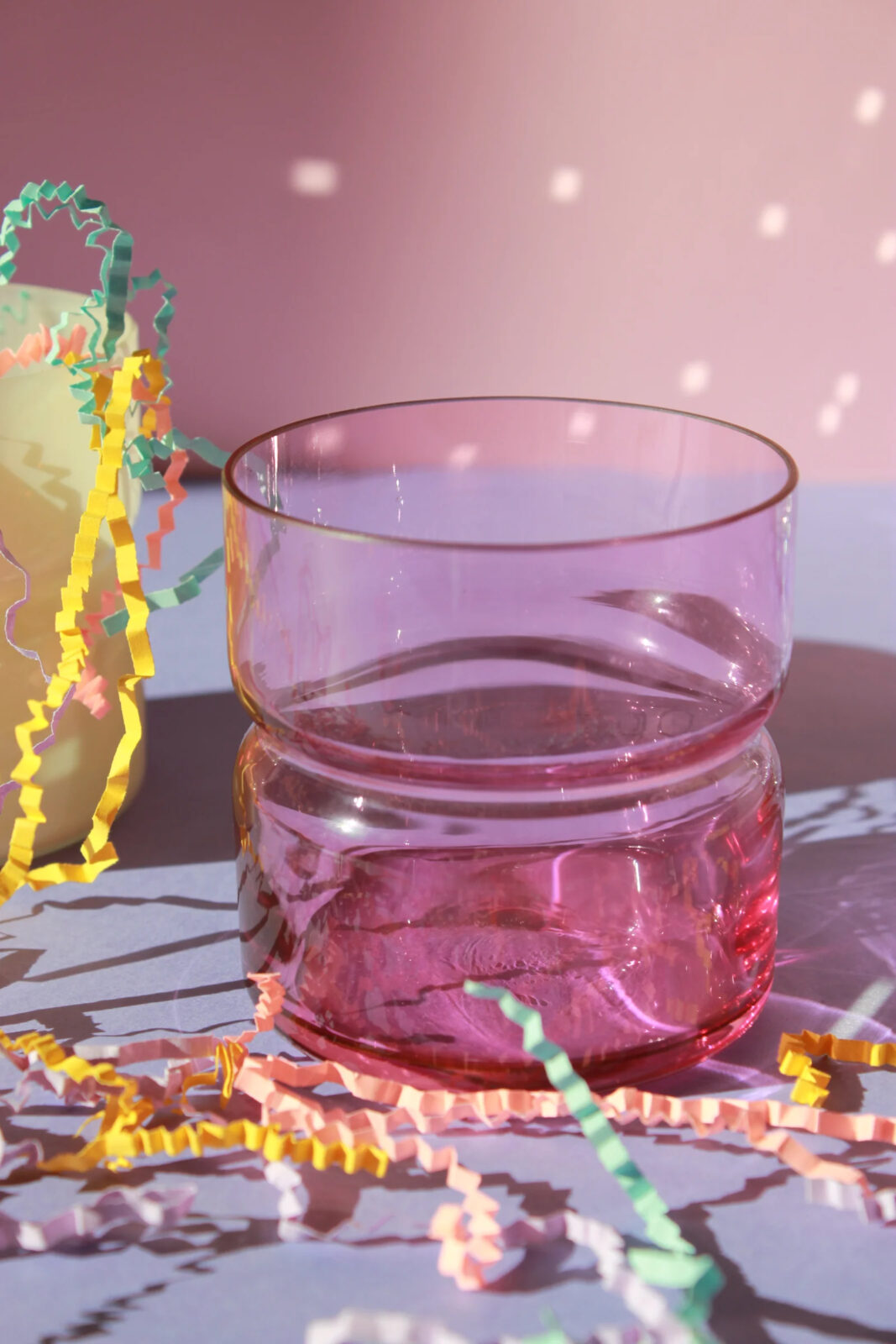
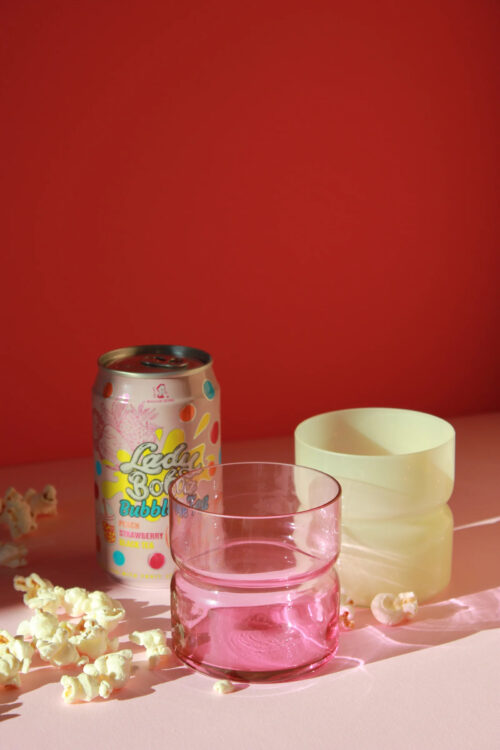
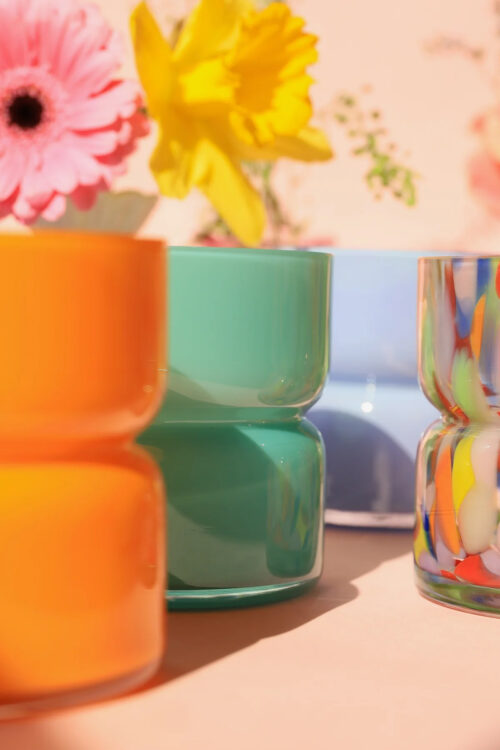
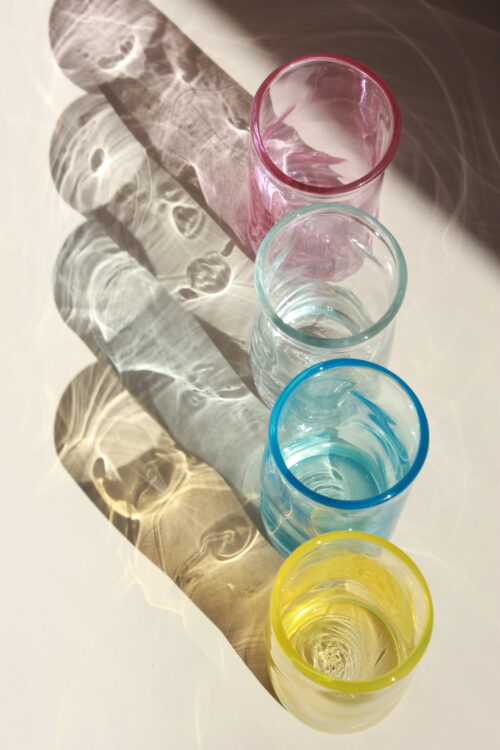
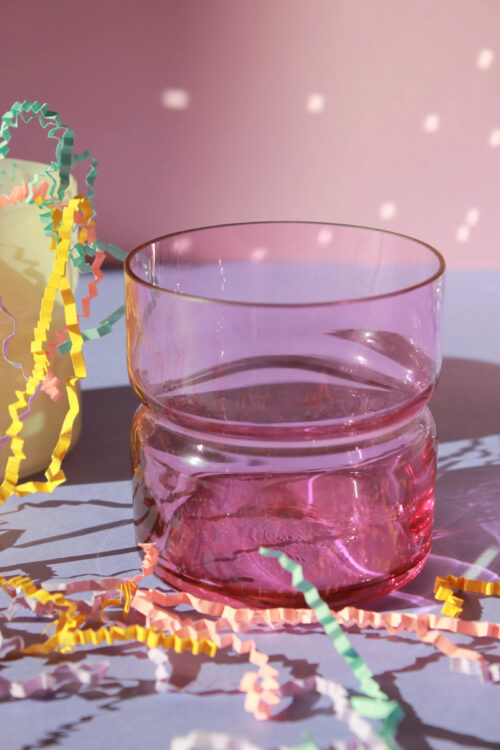
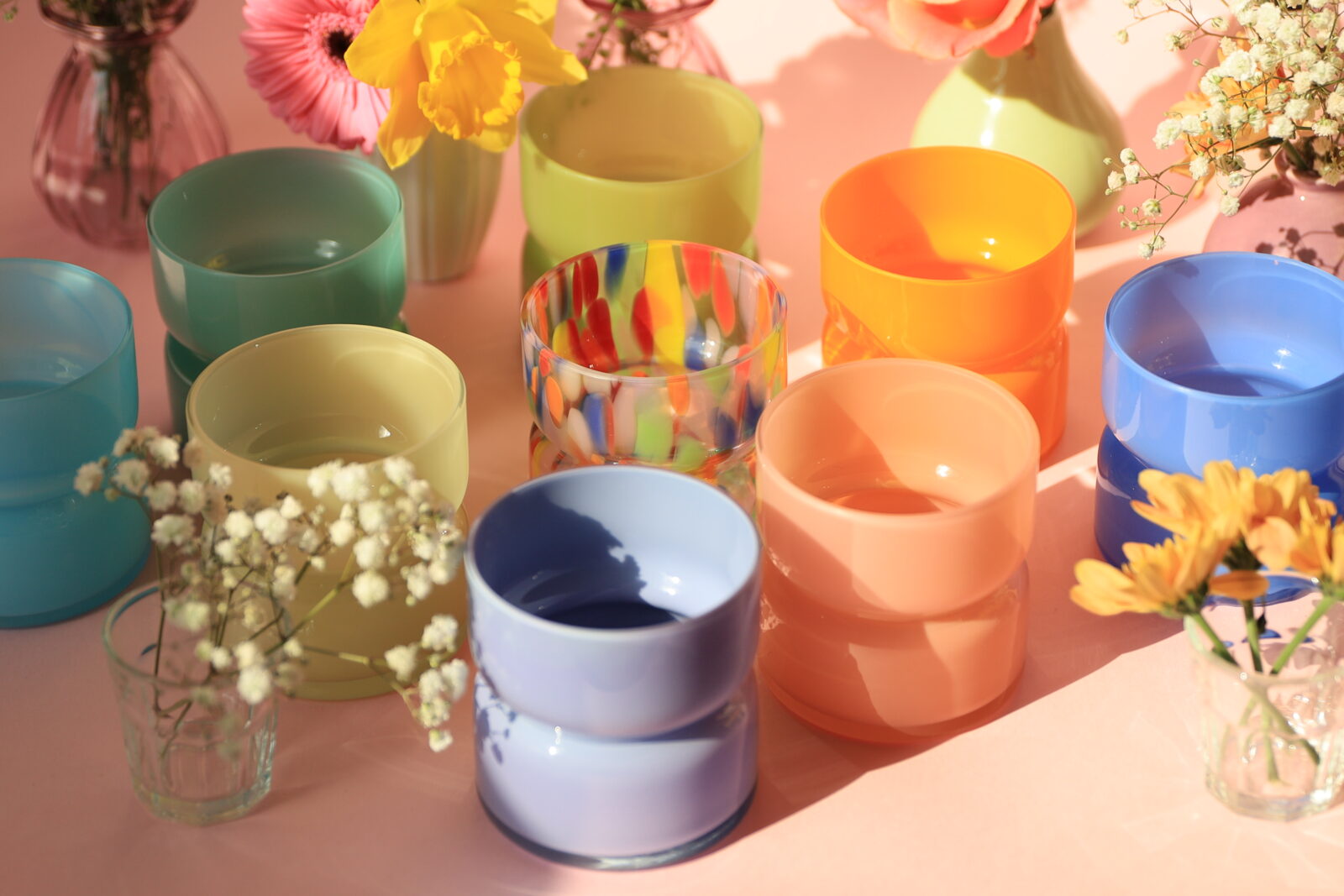
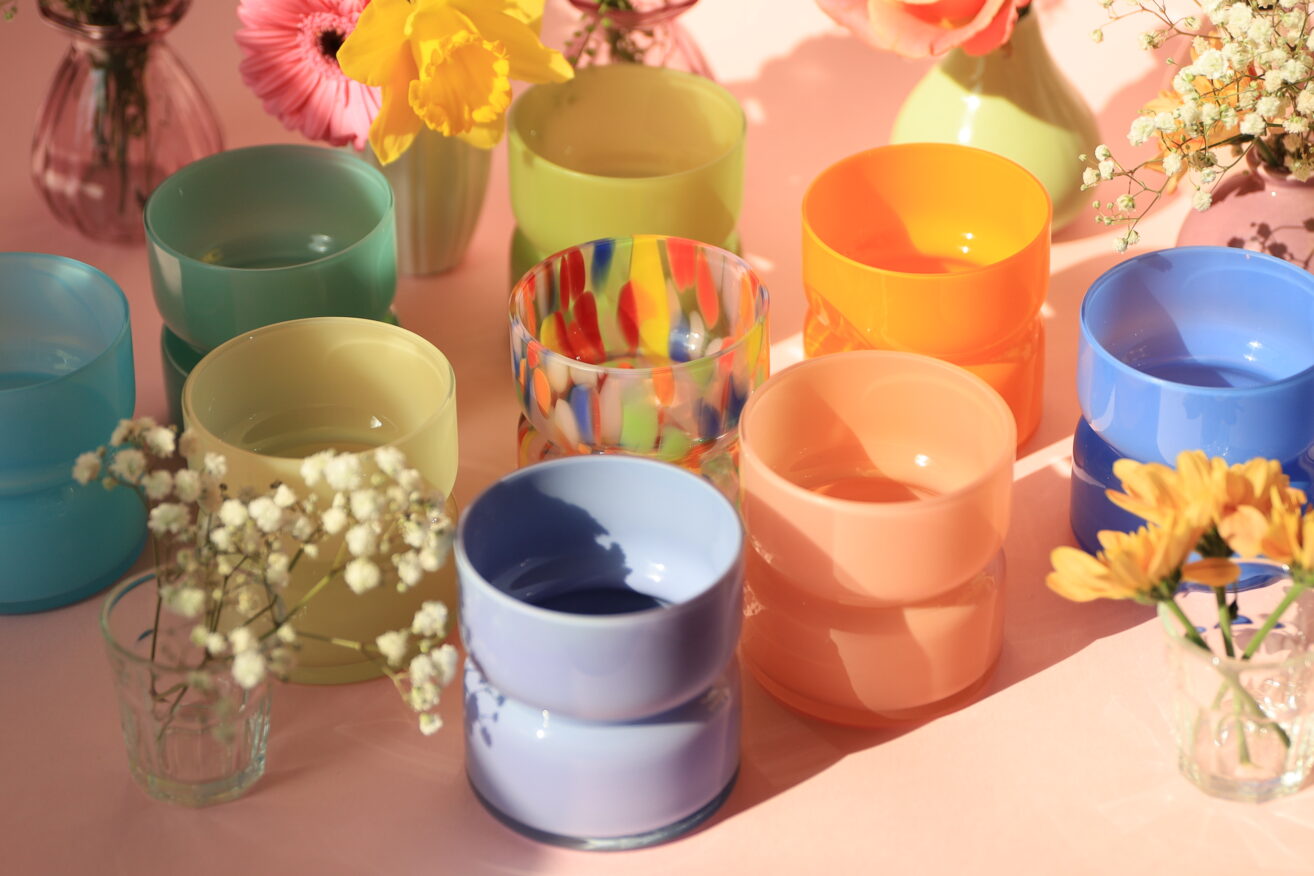
This openness to surprise echoes throughout her glassware collections. tulp is inspired by women, each glass features a distinctive “waist indentation”, though in a minimalist form, complemented by beautiful glass colours. The collection is defined by clarity and structure: blown into wooden moulds, its forms are calm, consistent, and almost architectural, with colour embedded directly into the glass mass so it becomes a permanent part of the material. 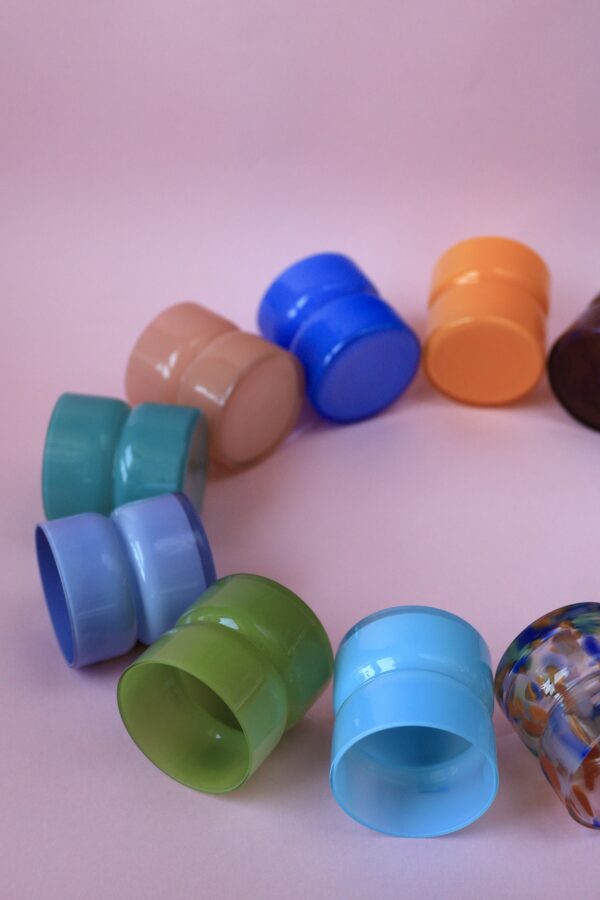
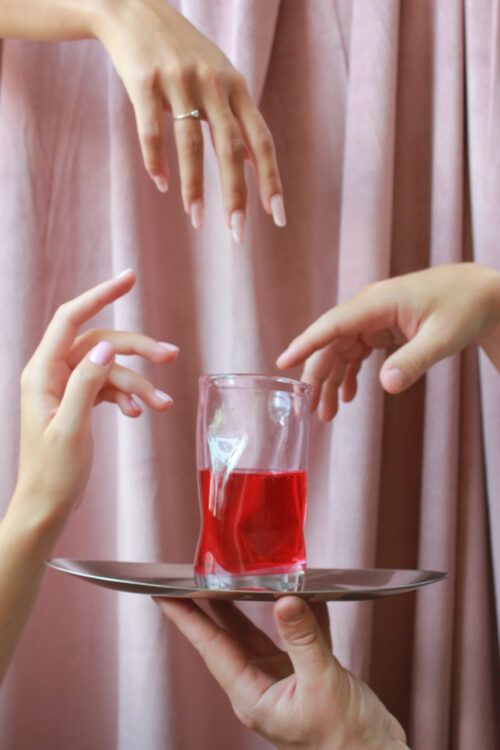
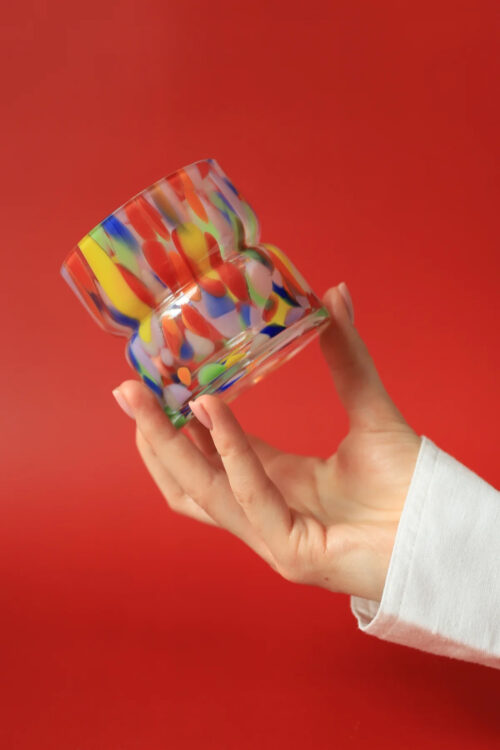
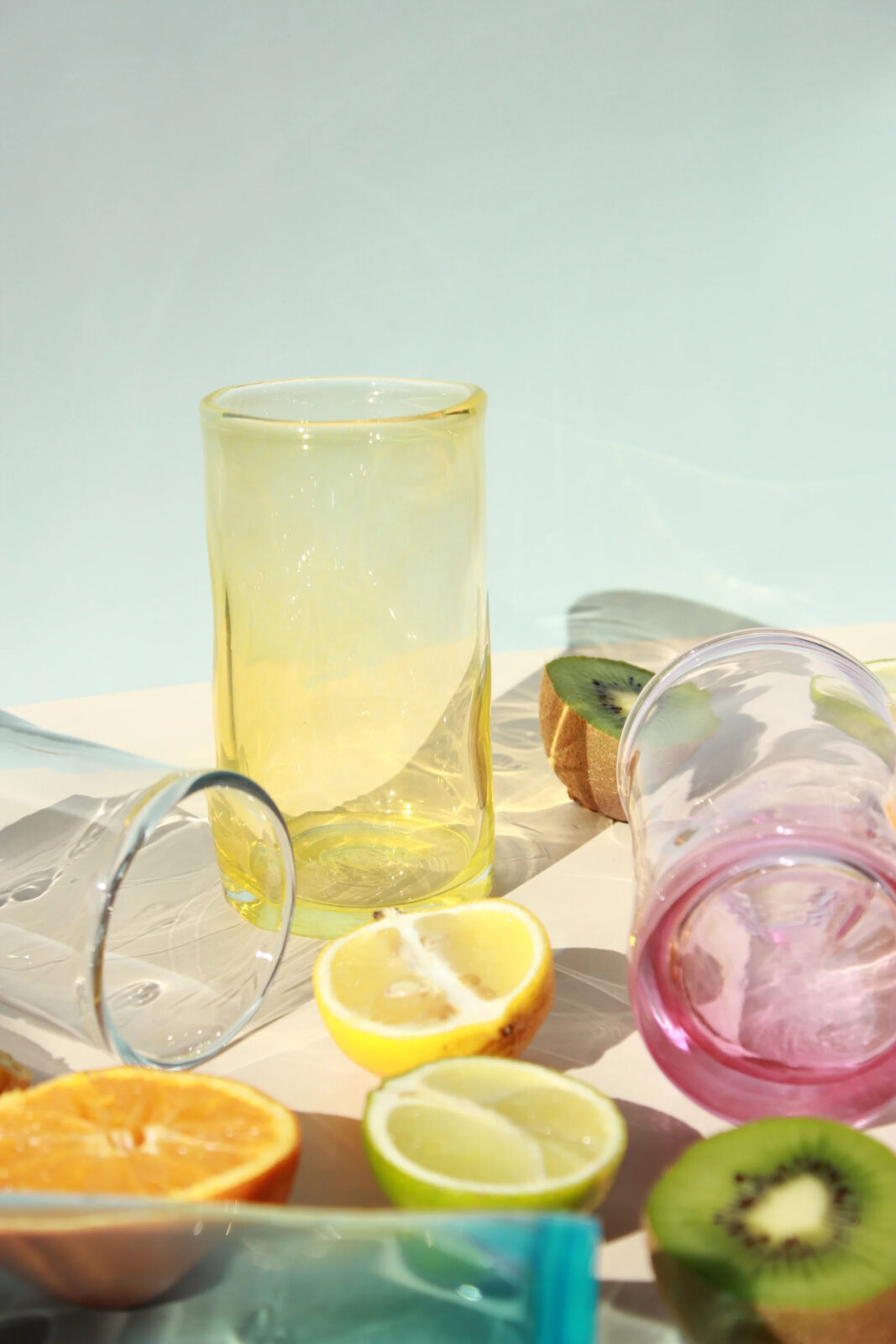
Nice, by contrast, embraces movement and unpredictability. The name of the collection comes from vibrant city located on the French Riviera, one of Magdalena’s favourite places. The shape of each glass is irregular, just like the line of that beautiful coastline. The Nice collection embodies a light, summery vibe. Blown into metal moulds and then further shaped by hand while still hot, each piece develops its own distinctive, wavy surface—thicker, more sculptural, and entirely individual.
Where tulp speaks in a quiet, composed language, Nice feels expressive and spontaneous, allowing process and gesture to remain visibly present in the final object.
In its molten state, glass is incredibly malleable and almost limitless.
Colour as an Invitation
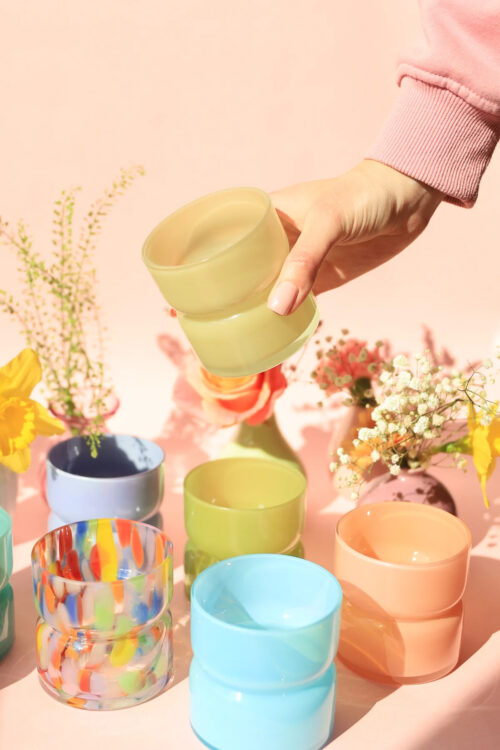
At first glance, lorki glass stands out for its colour palette: light, joyful, and unapologetically playful. This is not a marketing strategy but a deeply personal aesthetic choice. “I love color, unconventional combinations, and playful forms,” Magdalena says. Yet it also operates as a subtle manifesto.
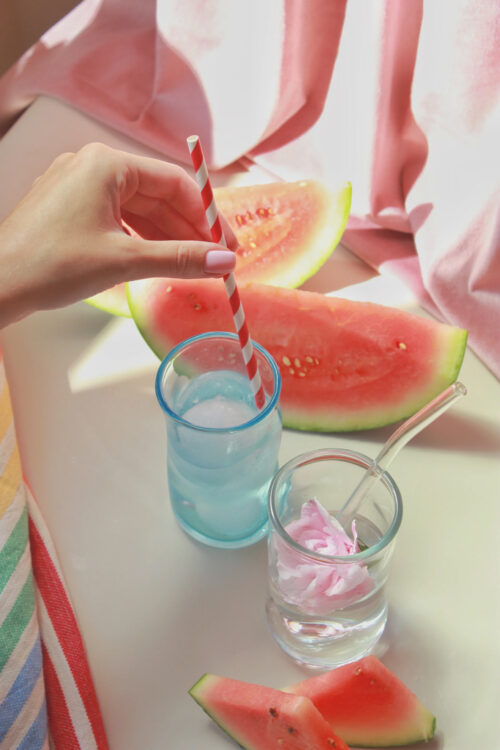
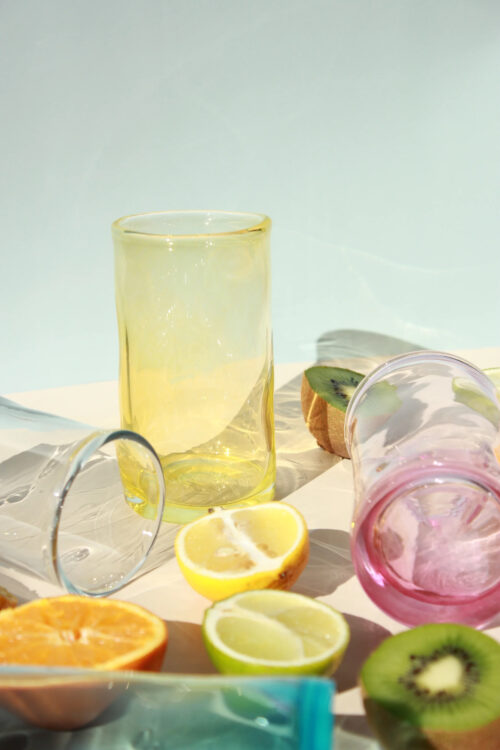
Designer glass is often framed as precious, distant, and untouchable. lorki glass deliberately moves away from this narrative. These are objects designed to live on the kitchen table, not behind glass doors. Lemon water, luke-warm drinks, or a casual evening drink are all valid occasions. “It doesn’t have to sit in a cabinet as << glass for special occasions>>,” she notes— “You can use it every day. It’s an experience in itself” an idea that feels both simple and quietly transformative.
It doesn’t have to sit in a cabinet as “glass for special occasions”. You can use it every day. It’s an experience in itself!
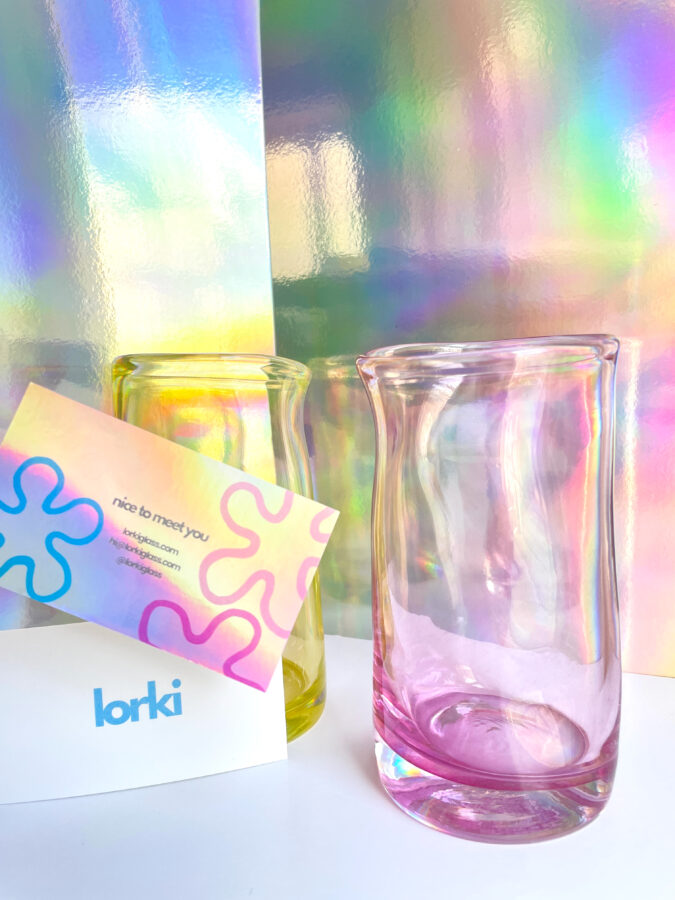
A Mirrored Gesture: Extending Glass into Graphic Identity
This sensitivity to materiality also extends beyond the objects themselves into lorki glass’s visual identity. For the business cards, Magdalena chose Mirror Hologram paper sourced from Europapier, a one‑sided metallic mirror board whose reflective surface subtly recalls the sheen and depth of glass. (previously here). The hologram finish introduces a gentle play of colour and light, echoing the vibrancy and optimism at the heart of the brand. It’s a small but telling gesture—one that translates lorki glass’s material values into a tactile, graphic experience, where even the first point of contact reflects the spirit of the objects themselves.
Every detail of the brand resonates in harmony: the unboxing experience is exactly in the same lines – colorful, fun, memorable. Created with care and thoughtfulness, to make your day brighter. A joy to order, to receive, and to use every day.
Looking Ahead
As lorki glass continues to evolve, Magdalena remains rooted in experimentation. Just last week she launched the new Flower Meadow collection in all its glory: edgy, fresh, vibrant colours in tones like Baltic sea, orange pop, turquoise story, flamingo, lepanto, holunder, luck, baby blue, spring or lavender haze. Alongside these gorgeous new additions, she is doing ongoing work on a carafe. Longer-term, she envisions a deeper dialogue between architecture and glass—objects conceived specifically for interiors, where spatial thinking and material expression converge.
Where to find lorki
Those curious to experience lorki glass in person will have several opportunities to do so. In April, Magdalena will present the brand at the Targi Rzeczy Ładnych independent design fair in Warsaw on 18-19th of April, where lorki glass will be available at her own stand. Beyond the festival, the collections can be found in a selection of artisan and design‑focused stores in Vienna, Poznań and Warsaw, with which she collaborates closely. lorki glass is also available through the brand’s online shop, extending its quiet, everyday presence well beyond physical spaces.
At its core, lorki glass is about celebrating the ordinary. It honours craftsmanship without nostalgia, colour without excess, and design without distance. In Magdalena’s words, it is about “celebrating everyday life”—one glass at a time.