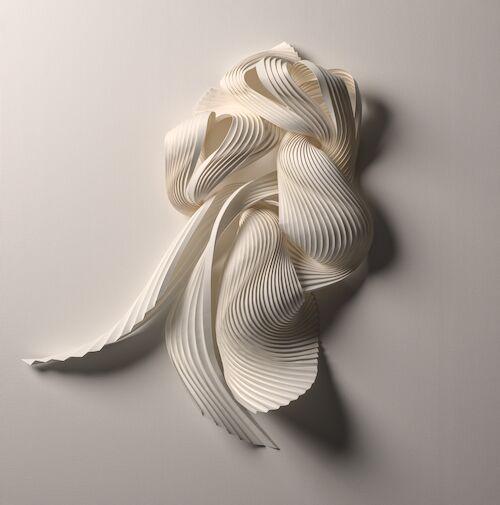
For British artist Richard Sweeney, paper is far more than a material. It is a collaborator. Through folding, scoring, pleating, and careful manipulation, Sweeney transforms flat sheets into fluid, organic sculptures that seem to defy the inherent limitations of their medium. Suspended somewhere between geometry and nature, his works capture a sense of movement that feels both precise and spontaneous, revealing the extraordinary sculptural potential hidden within an everyday material.
Born in Huddersfield, England, in 1984, Sweeney discovered an early aptitude for sculpture before studying Three Dimensional Design at Manchester Metropolitan University. It was there that his experiments with paper as a model-making material gradually evolved into a sculptural practice in its own right. What began as an exploration of form and structure developed into a lifelong investigation of how simple materials can be manipulated to create complex spatial experiences.
What began as an exploration of form and structure developed into a lifelong investigation of how simple materials can be manipulated to create complex spatial experiences.
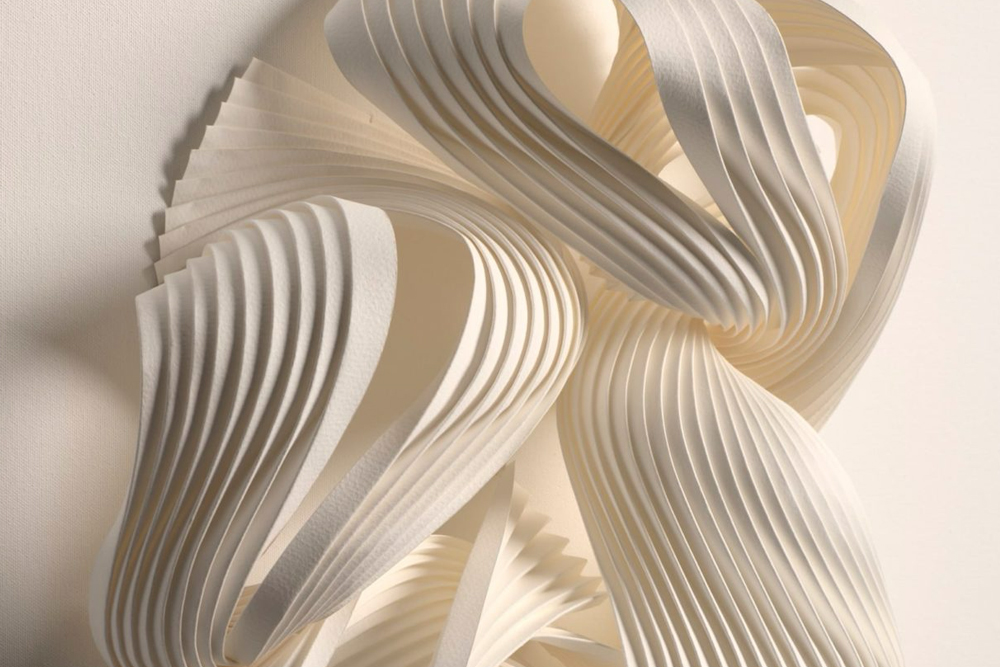
At the heart of Sweeney’s practice is a fascination with process. Rather than imposing a predetermined shape onto a material, he works in dialogue with it, allowing folds, curves and tensions to suggest new directions. Repeated scoring patterns, curved pleats and modular constructions form the basis of many of his works, creating structures that appear to grow naturally, almost as if they have emerged rather than been designed. This balance between control and chance has become a defining characteristic of his practice.
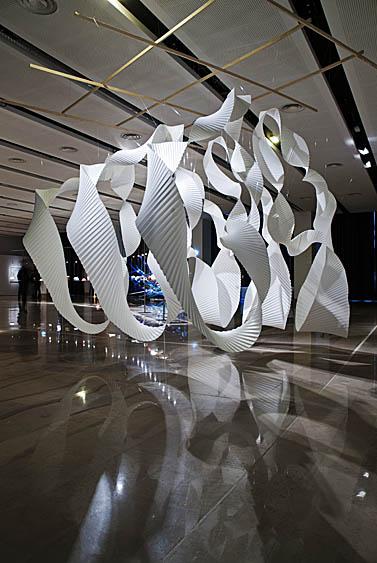
Although often abstract, Sweeney’s sculptures are deeply informed by observations of the natural world
The flowing lines of rivers, the movement of clouds, the structure of shells and the flight of birds all find their way into Sweeney’s work. Rather than directly replicating these forms, he translates their underlying rhythms and growth patterns into sculptural language, resulting in works that feel simultaneously familiar and impossible to define.
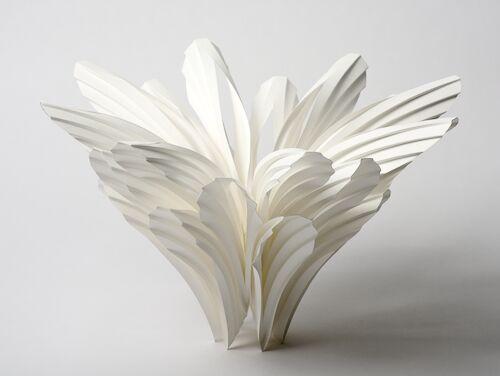
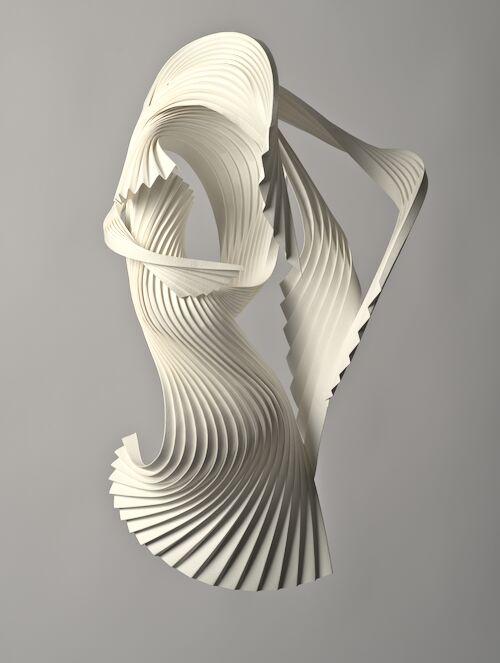
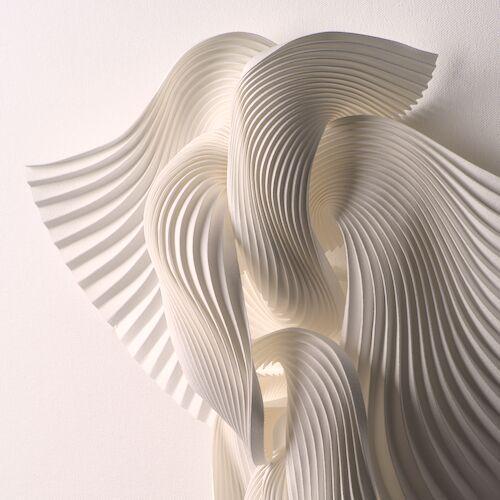
This relationship between geometry and organic form is particularly striking in his paper sculptures. Through carefully engineered folds, flat sheets become dynamic volumes that twist, expand, and contract. Light interacts with their surfaces to create shifting shadows and highlights, emphasizing the sense of movement embedded within each piece. Many works appear suspended in a moment of transformation, as though they might continue unfolding beyond the boundaries of the sculpture itself.
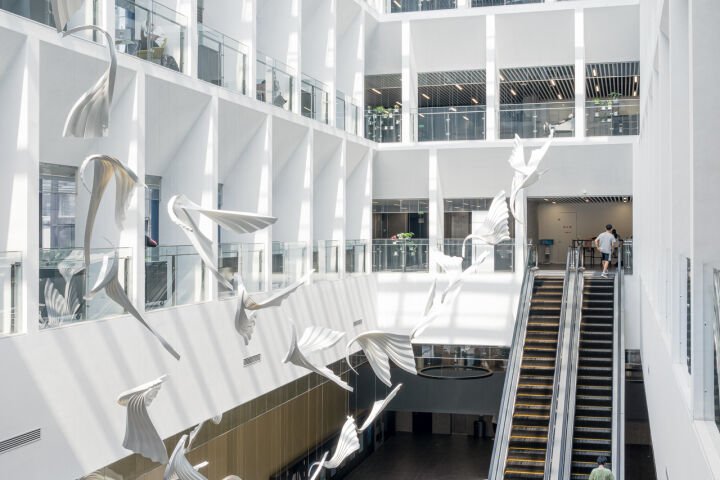
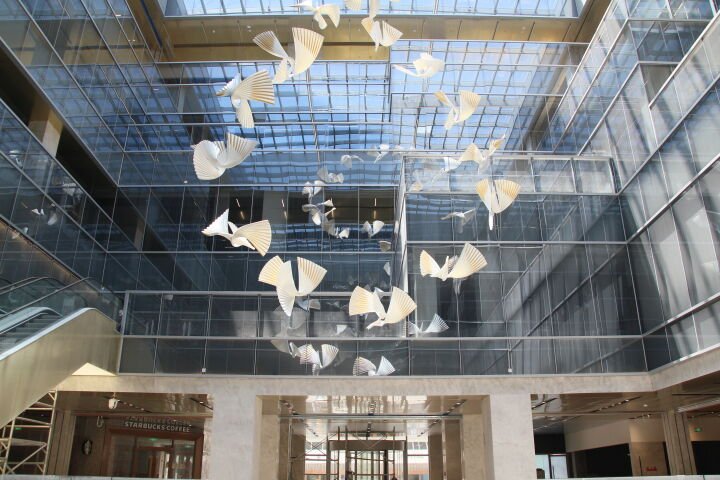
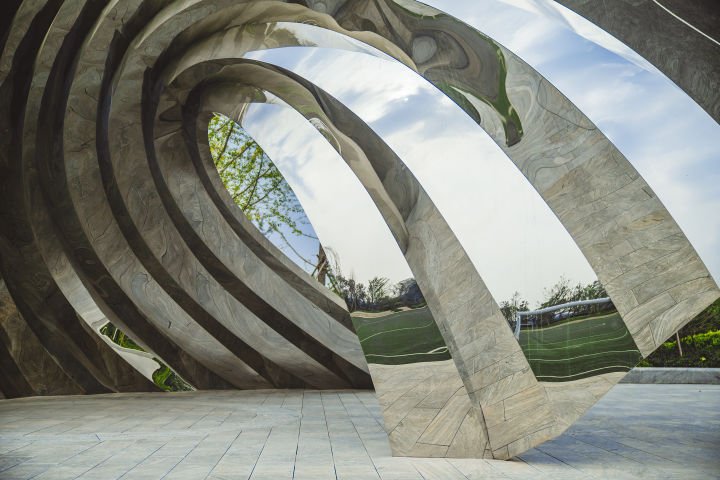
While paper remains central to Sweeney’s artistic identity, his practice extends far beyond the studio-scale sculptures for which he first became known. Over the years, he has translated his distinctive visual language into large-scale public artworks, collaborating with fabricators and engineers to realize monumental versions of forms originally explored through paper models.
Richard Sweeney’s work challenges our perception of paper itself
Often associated with communication, packaging or temporary use, paper becomes in Sweeney’s hands a medium capable of extraordinary complexity and permanence. Through patient experimentation and an intuitive understanding of material behaviour, he reveals possibilities that exist far beyond the flat surface of the sheet. His sculptures serve as a reminder that innovation does not always require new materials or technologies. Sometimes it begins with looking more closely at familiar materials and discovering what they are capable of becoming. In Sweeney’s practice, paper is not merely transformed — it is continually reimagined.